
The Enchanted Forest of Parauta (El Bosque Encantado de Parauta), set deep in the Serranía de Ronda, is a magical chestnut woodland dotted with small gnomes, fairies and hand-made enchanted figures hidden among the trees. It’s one of those places that manages to feel playful without being childish — and one of the most original and atmospheric walks you can do in inland Málaga.
IMPORTANT: After the heavy rains in 2025-26 part of the trail was washed away. The town are working to raise the money for the repairs, but until further notice the route is closed for safety. Alternative nearby, in Cartajima, is the Senda Perdida, the lost pathway that features sculptures by the same artist.

We’ve visited El Bosque Encantado de Parauta several times, and each visit has revealed a different side of it. Once in spring, when everything felt fresh and green; another time sharing the walk with different generations; and most recently just the two of us, during Bosque de Cobre season, when the chestnut forest turns copper and gold and the whole landscape looks like a painting.
Its popularity does mean it can get busy at certain times of year, so in this guide we’ll share everything you need to know about El Bosque Encantado de Parauta, along with practical tips to help you choose the best moment to visit and experience it at its best.
Contents
What is the Bosque encantado?
The village of Parauta was already a small gem in the Serranía de Ronda, but the creation of the Enchanted Forest of Parauta (El Bosque Encantado de Parauta) has added an extra layer of charm. This white village, beautiful in its own right, has found in this project a unique way to attract travellers looking for something a little different, right in the heart of nature.

The mind behind this magical woodland is Diego Guerrero, a local artist who has transformed the forest into a storybook setting. Through his hand-carved wooden figures, he has brought to life gnomes, fairies and fantastical characters that appear unexpectedly along the path. To protect the forest, he works only during the winter months — between November and February — when the trees are dormant and less vulnerable. Each sculpture is carefully treated afterwards to help the wood heal and endure over time.
But Parauta’s appeal goes far beyond this enchanting trail. The village lies within the Valle del Genal and forms part of the Sierra de las Nieves National Park, a protected area recognised as a Biosphere Reserve. On top of that, Parauta proudly belongs to the Los Pueblos Más Bonitos de España, a distinction reserved for some of the most picturesque villages in the country.
The enchanted forest of Parauta hiking route
Almost everyone who visits Parauta comes to walk the trail through the Enchanted Forest (El Bosque Encantado de Parauta). It’s an easy, enjoyable hike set in a beautiful natural environment, with lovely views and a playful, creative twist that makes the walk feel different from a standard woodland route.

The Enchanted Forest trail officially opened in the summer of 2022. The main route is around 3.5 km return (depending on where you start) and follows a path dotted with hand-carved wooden figures: gnomes, butterflies, fairies, flying horses and other imaginative characters that appear along the way.

Most of the route is paved, making it comfortable to walk and easy to follow. That said, there is some gentle elevation gain and a few short slopes, so it’s not completely flat. The final stretch includes a brief section of compacted dirt track, but it’s short and doesn’t significantly change the difficulty of the walk.
Distance and timing
- Approx. 3.5 km return from the main access point
- Around 4.5 km return if you start from the sports centre car park
- Walking time varies, but most visitors complete it comfortably in 1–2 hours, depending on stops and pace
Want to extend the walk?
If you’re looking for something longer, you can continue along the PR-A 222 trail, which links Parauta with Cartajima. This is a linear route of 4.5 km one way, with just over 200 metres of elevation gain, mostly along a paved path.

It’s perfectly feasible to walk to Cartajima and back (around 9 km in total) and still be back in Parauta in time for lunch — a great option if you want to turn the Enchanted Forest walk into a more substantial half-day hike.
The village of Parauta
The white village of Parauta is best known for its magical woodland trail, El Bosque Encantado de Parauta, but the village itself is just as much part of the experience. Nestled in the Serranía de Ronda, Parauta combines traditional Andalusian architecture, local gastronomy and a strong sense of folklore that makes it well worth exploring beyond the forest route.

After completing the Enchanted Forest walk, take time to wander through the village streets. Parauta is compact but full of character, with whitewashed houses, small squares and carefully curated artistic details. It’s officially recognised as one of Los Pueblos Más Bonitos de España, and it’s easy to see why.
Hanging chairs and local legends
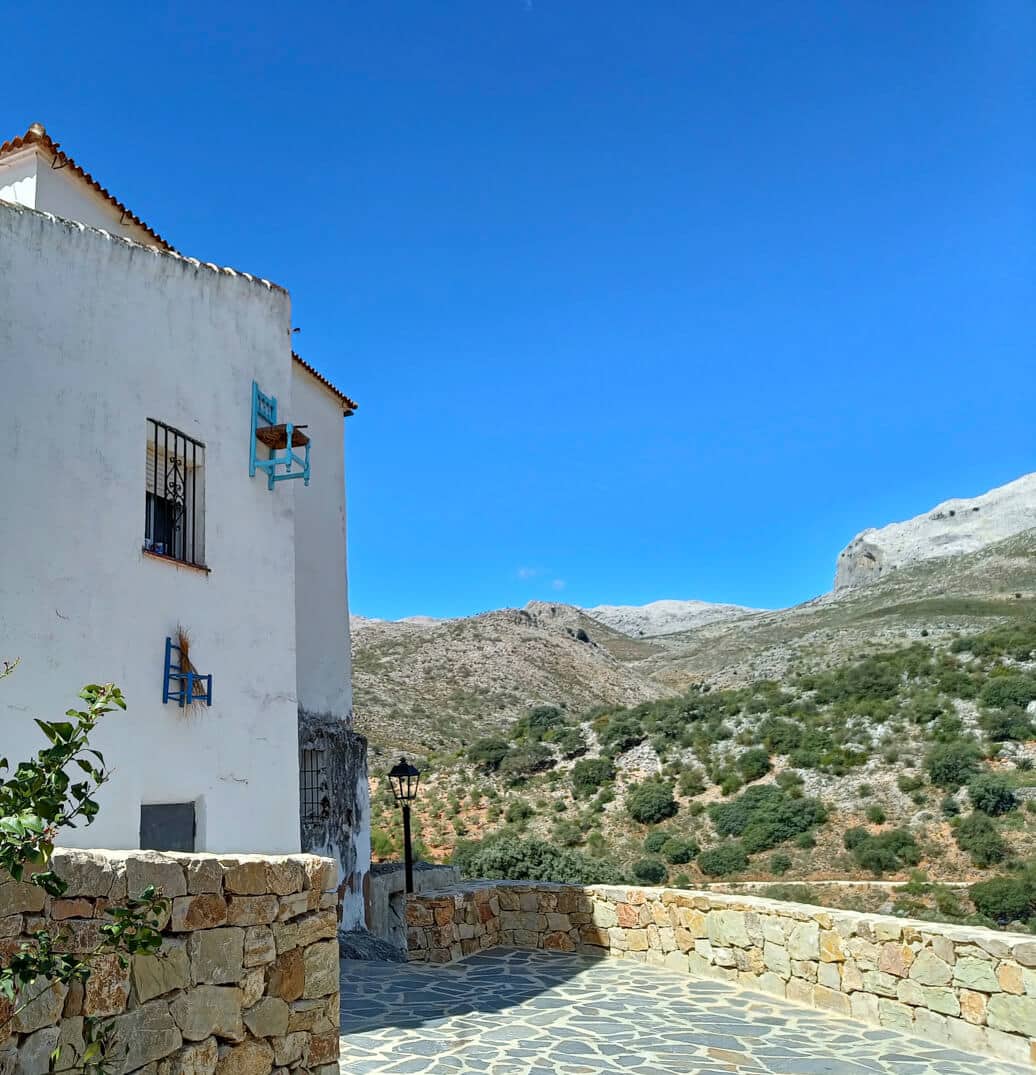
One of the most distinctive sights in Parauta is the wooden chairs hanging high on house façades. According to local legend, they’re placed there so fairies, gnomes and forest creatures can rest when they roam the village at night. This playful blend of tradition and imagination is part of what gives Parauta its unique identity.
El Rincón del Beso and historic corners
Another must-see spot is El Rincón del Beso, one of the most photographed corners of the village. From here, it’s easy to explore several key landmarks on foot:

- Plaza de la Constitución, the main square and social hub
- The arch on Calle Altillo, right next to the square
- The Medieval Quarter, with narrow streets and Moorish influences
- The statue of Omar Ben Hafsún, a historical figure born in Parauta
Wandering through the Mudejar-style streets without a fixed route is one of the best ways to experience the village.
Art, sculptures and evolving details
Parauta isn’t static — new sculptures and decorative elements are added regularly, which means every visit feels slightly different. In the upper part of the village, you’ll find large welcoming figures and installations that immediately set a fairytale tone as you arrive.

On Calle Calvario, don’t miss the striking street art mural by Doger, a contemporary piece that contrasts beautifully with the village’s traditional architecture.
A storybook village in the Serranía de Ronda
Parauta fully embraces its narrative identity. At the entrance to the village, a large open book sculpture marks the beginning of the story, while the final page appears at the end of El Bosque Encantado de Parauta. Even after reaching that point, the sense of magic continues as you explore the village and surrounding forest at your own pace.

Although Parauta is small, it’s packed with viewpoints, artistic details and hidden corners. Using a map of points of interest helps ensure you don’t miss any highlights — especially if it’s your first visit.

Where to eat in Parauta
Despite its small size, Parauta offers a few solid options for eating well, whether you’re looking for something casual after walking El Bosque Encantado de Parauta or a more traditional mountain meal.
Municipal Pool Bar (Bar de la Piscina Municipal)
One of the most informal and budget-friendly options is the bar by the municipal swimming pool, located right next to the main parking area. It works like a small chiringuito, with outdoor seating and a simple menu of tapas and drinks.
On warm days, it’s a pleasant place to stop for a cold beer or a light bite, especially after completing the forest walk. It’s relaxed, practical and well located.
El Farol
In the heart of the village, next to the town hall, you’ll find El Farol. It’s a traditional local bar serving tapas and shared dishes (raciones). While we haven’t personally eaten here, it’s one of the two main indoor dining options in Parauta and a convenient stop if you’re exploring the historic centre.
Restaurante Anafe (Mesón Anafe)
For a more authentic taste of the Serranía de Ronda, Restaurante Anafe is the standout choice. We´ve eaten here 3 times.
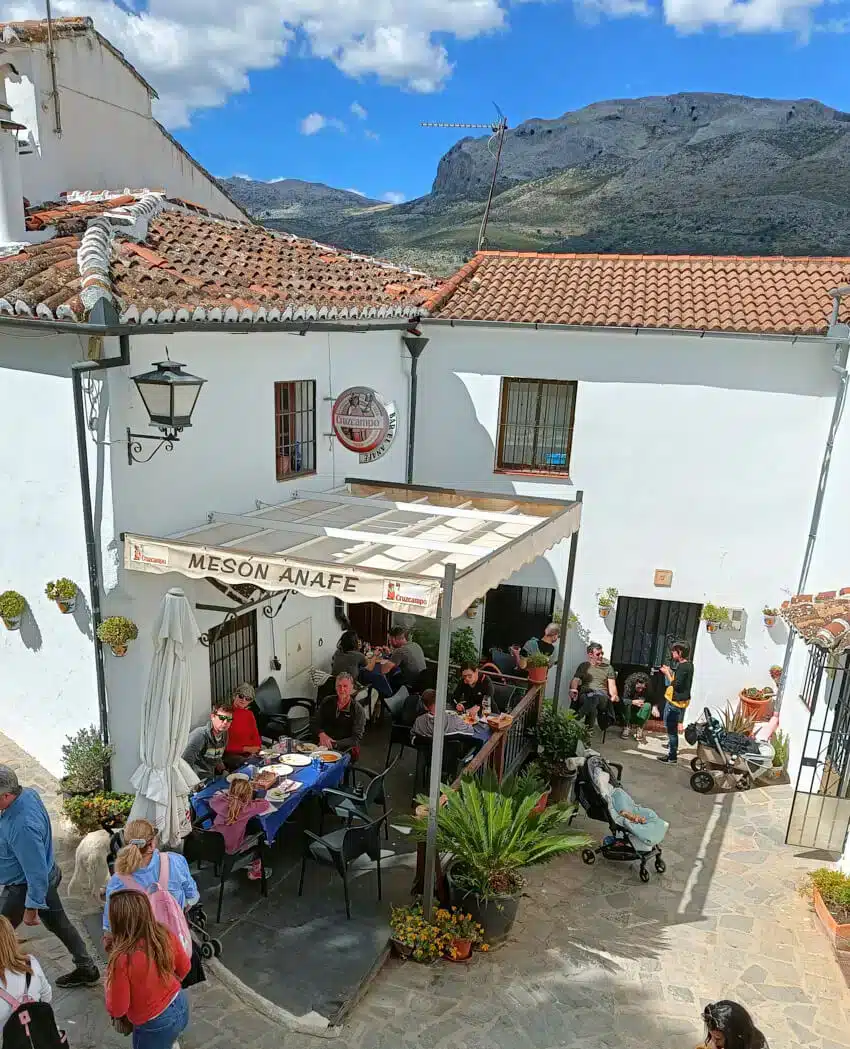
This small, locally run restaurant specialises in traditional mountain cuisine. There’s a tiny outdoor terrace and an indoor dining room with seating for around 35 people. The menu features hearty regional dishes such as:
- Venison with chestnut sauce (venado a la castaña)
- Wild boar with mushroom sauce
- Plato de la Serranía (chorizo, black pudding, fried egg and peppers)
- Seasonal vegetable dishes, like wild asparagus scramble
Everything is well cooked, generous and rooted in local produce. Service is friendly and unpretentious, and it’s one of those places where simple recipes are done exceptionally well.
Tip: If you’re visiting at the weekend or during peak seasons, it’s strongly recommended to book in advance. On mild days, the terrace is particularly pleasant and dogs are usually welcome outside.
Picnic options along the route
If you prefer something simple and scenic, bringing your own food and enjoying a picnic is a great alternative. Along the route of El Bosque Encantado de Parauta there are several benches and picnic tables set in beautiful natural viewpoints, making this one of the most enjoyable low-cost options.

At weekends, especially Saturdays and Sundays from around 11:00, small stalls often appear near the start of the trail selling snacks and cold drinks. There are also picnic-friendly spots near the children’s park and open-air gym by the parking area.
Practical tips for visiting El Bosque Encantado de Parauta
Parauta has become extremely popular in recent years, especially thanks to social media (sorry). These tips will help you enjoy El Bosque Encantado de Parauta at its best.
Parking: where to leave your car
Do not try to drive into the village centre. The best option is to park by the sports facilities / municipal pool area, which is clearly signposted on arrival. When this area fills up, the adjacent sports pitch is usually opened as overflow parking.
This parking area is also convenient if you plan to explore the village before or after the walk.
Arrive early to avoid crowds
If there’s one piece of advice that really makes a difference, it’s this: start early.
El Bosque Encantado de Parauta has become very popular, and the trail can feel busy later in the morning. Arriving around 10:00 am or earlier often means you’ll enjoy the route almost in solitude. Two hours later, parking is usually much fuller and the path noticeably busier.
If you’re visiting during El Bosque de Cobre (the copper forest season, usually in autumn around November), expect even more visitors. During peak foliage weeks, walkers start arriving from 8:00 am, as the trail combines magical sculptures with one of the most striking autumn landscapes in the Genal Valley.

Accessibility considerations
Although the route is short and generally well maintained, it includes some slopes.
- The trail is not recommended for wheelchair users due to gradients and short sections of compacted earth.
- Pushchairs are possible but require effort on uphill sections.
- Anyone with reduced mobility should take the elevation changes into account before starting.
Respect the natural environment
Part of what makes this forest special is its setting. Help keep it that way:
- Take all rubbish with you — there are no bins along the route.
- Do not collect chestnuts from the ground. They are private property and an important source of income for local families.
- If you visit with a dog, keep it under control and on a lead where necessary, and always clean up after it.

Visiting by campervan
The road to Parauta is perfectly manageable for campervans. On arrival, head straight to the municipal pool parking area, which is the most suitable place to park larger vehicles.
Overnight parking is sometimes possible in this area, but spaces are limited. If you plan to stay, it’s best to arrive early in the day or later in the evening. Campervans are often seen parked here, especially outside peak weekends.
Where to stay in Parauta
We usually visit Parauta as a day trip from Málaga or as a stop on a longer route through the Genal Valley (which we highly recommend). That said, staying overnight here is something we’re keen to do — Parauta is wonderfully peaceful once day visitors leave, and waking up surrounded by the mountains is a real treat.
Here are some well-located rural accommodation options in and around Parauta that we’ve shortlisted for our next visit:
Casa Rural La Pilonga de Parauta
A traditional two-storey village house with three bedrooms and a lovely terrace with views. Located right in the village, it’s ideal if you want to stay within walking distance of everything.
Casa Rural Juanito Peña
A charming village house in the historic centre of Parauta, offering three bedrooms and a small, very inviting terrace. A great option for travellers who want to stay right in the heart of the village.
Casa Orencio
Another rural house within the village itself, with four bedrooms and space for up to eight adults. It has a fireplace and is very well equipped — perfect for a relaxed weekend in the mountains.
Casa Antoñita
The largest option in Parauta. This three-storey house has three spacious bedrooms and can accommodate up to ten guests, making it ideal for groups looking for plenty of space.
🌳 La Chácara – Fuente de los Peces
Located just outside Parauta (within walking distance), this beautiful rural house sleeps up to six adults and features a spectacular swimming pool surrounded by nature. Ideal if you’re looking for tranquillity and outdoor space.
Final thoughts on El Bosque Encantado de Parauta
El Bosque Encantado de Parauta is one of those places that manages to be simple and special at the same time: an easy walk through beautiful scenery, a touch of imagination carved into the landscape, and a white village that’s well worth exploring beyond the trail itself. Whether you visit in autumn during the copper-coloured chestnut season or in spring when everything turns green, Parauta is a stop that leaves a lasting impression.

Frequently Asked Questions – El Bosque Encantado de Parauta
What is the terrain like and how demanding is the walk?
The route is easy and accessible, with a well-maintained surface (mostly paved or compacted), gentle inclines, and no technical difficulty. It’s suitable for all fitness levels and ages, including older visitors. Expect a relaxed walk rather than a hike.
Do you need to book in advance or pay an entrance fee?
No. Access is free and open to everyone, and there is no need to book or buy tickets.
Are there services at the trailhead?
In the village of Parauta you’ll find benches, picnic areas and public fountains, but there are no toilets or cafés along the trail itself. It’s best to use village facilities before starting the walk and bring water with you.
What is the best time of year to visit?
Autumn is the most popular season, when the chestnut forest turns shades of copper, red and gold — the famous Bosque de Cobre. It’s visually stunning but also the busiest period, especially at weekends. If possible, visit on a weekday for a quieter experience.
Spring is another excellent option, with lush green landscapes, mild temperatures and a more peaceful atmosphere, ideal if you prefer fewer crowds.
Where can you park to visit El Bosque Encantado de Parauta?
The usual place to park is the designated area near the start of the trail. During peak autumn weekends this fills up quickly, so the town also opens the municipal sports centre car park, just a short walk away. It’s a very practical alternative when visitor numbers are high.
About the Authors:
This article was written by Lucía and Mike, the couple behind Andalusia Uncovered and the creators of Bloguera Viajera, one of Andalusia’s leading family travel websites, where we have spent years sharing our experiences exploring Spain and beyond.
Andalusia Uncovered grew from a simple idea: to create an English-language resource based on real experiences, not recycled travel advice. Every place we write about is somewhere we have personally visited, photographed and explored ourselves.
Lucía grew up in Spain and Mike moved here from England in 2010. Together, we have spent years discovering Andalusia’s cities, white villages, beaches, mountains and lesser-known corners, often with our two daughters in tow.
In a world increasingly filled with generic AI-generated content, we believe first-hand experience matters more than ever. Our aim is to provide honest recommendations, practical advice and genuine local insight to help you discover the real Andalusia for yourself.