
Écija wasn’t a place we had ever made a special trip to visit.
Like many travellers exploring Andalusia, we’d driven past it countless times on the route between Seville and Córdoba without realising quite what was waiting beyond its skyline of church towers. It wasn’t until we spent a weekend exploring the city properly that we understood why Écija is considered one of the most important historic towns in inland Andalusia.
Its story stretches back more than 2,000 years. Founded by the Romans as Astigi, Écija became one of the most prosperous settlements in Roman Hispania before later flourishing again during the Baroque period. Much of the wealth generated during those centuries can still be seen today in the city’s churches, palaces and elegant mansions.
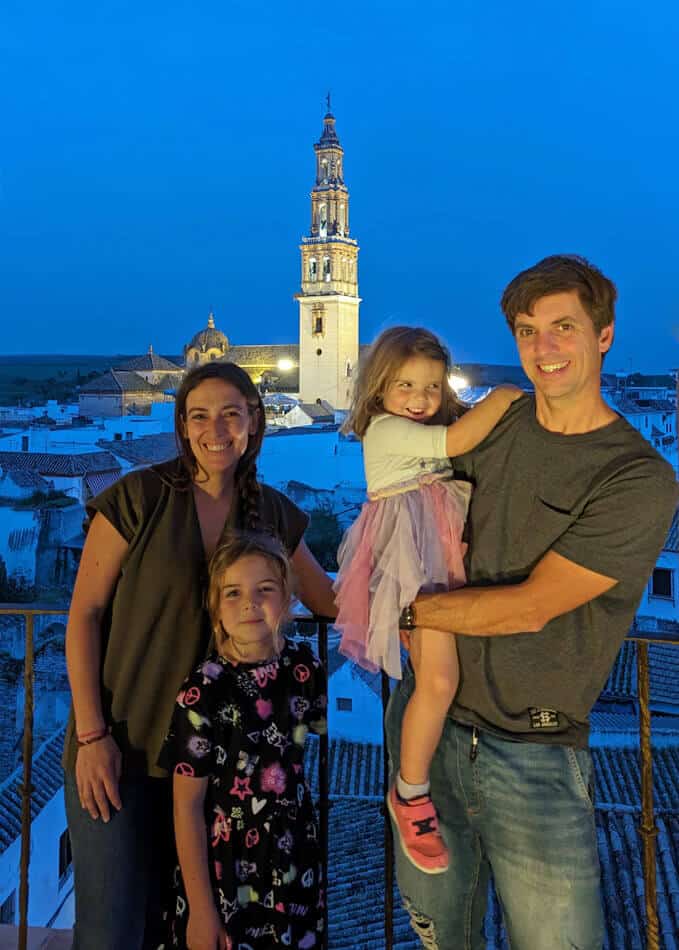
The most distinctive feature of all is the skyline. Écija is known as the City of Towers, a nickname earned thanks to its remarkable collection of church bell towers that still dominate the historic centre. Eleven of these towers survive today, creating one of the most recognisable skylines in Andalusia.
Located in the heart of the Sevillian countryside, on the banks of the River Genil, Écija sits roughly halfway between Seville and Córdoba. Despite its impressive heritage, it remains surprisingly under the radar compared with nearby destinations such as Osuna, making it an excellent choice for travellers looking to experience a more authentic side of Andalusia.
In this guide, we’ll share the best things to do in Écija, including the landmarks, viewpoints and historic sites that we think are worth your time.
Contents
Why is Écija Known as the City of Towers?
Écija is often referred to as the City of Towers, and once you arrive it’s easy to see why.
The town was historically home to a remarkable collection of church towers and bell towers, many of which were built or remodelled during the 17th and 18th centuries, when Écija enjoyed one of the most prosperous periods in its history. Wealth from agriculture, trade and the local nobility funded an ambitious programme of construction that transformed the city’s skyline.

Today, eleven of these towers still survive, rising above the rooftops of the historic centre. Their ornate baroque designs, colourful ceramic details and distinctive shapes have become one of Écija’s defining features.
The towers are visible throughout the city, but they are particularly striking when viewed from the surrounding countryside. As you approach Écija, they emerge above the sea of whitewashed buildings, creating one of the most recognisable skylines in Andalusia.
Many visitors come to admire the city’s churches and palaces, but it is these towers that give Écija its unique character and set it apart from other historic towns in the region.
Free tour: At the moment only offered in Spanish there are 2 very popular free tours offered by Civitatis:
Visit the Palace of Peñaflor
Built during the 18th century for the Marquises of Peñaflor, this magnificent baroque palace stretches along one side of Calle Emilio Castelar and is instantly recognisable thanks to its extraordinary façade. Running almost the entire length of the building is a continuous balcony that earned the palace its nickname, the Palace of the Long Balconies.

Although the palace itself is worth visiting, the highlight for us was climbing to the rooftop viewpoint. From here, you can enjoy one of the best views in the city, with Écija’s famous church towers rising above the rooftops in every direction.

We arrived shortly before closing time on our first evening in the city and headed straight to the viewpoint after dropping our bags at the hotel. Watching the late afternoon light fall across the historic centre was the perfect introduction to Écija and immediately gave us a sense of the city’s unique skyline.

Inside, visitors can explore parts of the restored palace, including the central courtyard, stables and several historic rooms. Restoration work is still ongoing in some areas, but even so, it remains one of the most rewarding historic buildings to visit in Écija.

Visitor Information
- Admission: €3
- Duration: Around 25 minutes
- Language: Spanish
- Highlights: Main courtyard, stables and the panoramic tower viewpoint overlooking Écija’s historic centre.
Explore the Palace of Benamejí and the Municipal History Museum
One of the best places to understand Écija’s long history is the Palace of Benamejí, an impressive 18th-century residence that now houses the Municipal History Museum.
The palace itself is worth seeing. A grand imperial staircase leads visitors into an elegant central courtyard, offering a glimpse into the wealth and influence once enjoyed by Écija’s noble families.

Inside, the museum traces the story of the city from prehistoric times through the Roman period and beyond. The displays include mosaics, archaeological finds and scale models that help bring ancient Astigi, as Roman Écija was known, to life.
The museum’s most famous treasure is the Amazona Herida (Wounded Amazon), a Roman marble sculpture discovered in Écija’s Plaza de España. Only a handful of examples of this sculpture are known worldwide, with others found in cities such as Copenhagen, Berlin and New York. The Écija example is particularly remarkable because traces of its original polychrome decoration survive, making it one of the most important archaeological discoveries in the city.

Opening Hours
These were the opening hours during our visit, but we recommend checking current times before travelling as they may change throughout the year.
19 September to 30 June
- Tuesday to Friday: 10:00am to 1:30pm and 4:30pm to 6:30pm
- Saturday: 10:00am to 2:00pm and 5:30pm to 8:00pm
- Sundays and public holidays: 10:00am to 3:00pm
- Closed Mondays
1 July to 18 September
- Tuesday to Friday: 10:00am to 2:30pm
- Saturday: 10:00am to 2:30pm and 8:00pm to 10:00pm
- Sundays and public holidays: 10:00am to 3:00pm
- Closed Mondays
The museum is also closed on 1 January, 6 January and 25 December.
Try Écija’s Famous Bizcochos Marroquíes
One of our favourite experiences in Écija had nothing to do with palaces, churches or museums.
Hidden behind a small wooden door at the Convent of Santa Florentina, cloistered nuns continue to make and sell one of Écija’s most famous local specialities: bizcochos marroquíes.

Buying them feels like stepping back in time. Visitors ring a bell at a discreet side entrance and wait for a nun to appear at a small wooden window. In our case, Mike had to remain outside while Lucía and the girls went in to buy the biscuits, as access to the convent is restricted in order to preserve the nuns’ enclosed way of life.
The recipe has been passed down through generations and remains one of Écija’s best-known culinary traditions. Light, sweet and incredibly addictive, they’re the kind of local treat that rarely makes it beyond the town itself.
The girls were fascinated by the whole experience. The tiny doorway, the quiet courtyard and the unexpected appearance of a nun behind the window felt like something from another era. The biscuits themselves were excellent too. We bought a couple of boxes thinking they would last until the next day, but by the end of the afternoon there wasn’t a single one left.
Visitor Information
Convent of Santa Florentina
C. Santa Florentina, 12, 41400 Écija, Seville
Telephone: +34 954 83 11 99
Opening Hours
- Monday to Sunday: 9:30am to 1:30pm and 4:30pm to 6:30pm
Opening hours can occasionally change, particularly during religious holidays, so it’s worth checking ahead if you’re making a special trip to buy the famous bizcochos marroquíes.
You’ll find bizcochos marroquíes for sale in various shops across Écija, but for us, buying them directly from the convent was part of the experience. Ringing the bell, speaking through the small wooden window and collecting a box of freshly made biscuits felt like a glimpse into a tradition that has changed very little over the years.
Wander Around Plaza de España
Known locally as El Salón, Plaza de España is the heart of Écija. Surrounded by cafés, restaurants and shops, it remains one of the city’s main meeting places and a natural starting point for exploring the historic centre.
The Tourist Office is located here, making it a useful first stop when you arrive. If you’re travelling with children, this is also where you can pick up the Marco Topo maps and activity sheets.

Look up and you’ll spot the tower of Santa María, one of Écija’s most distinctive landmarks. Its design is often compared to Seville’s famous Giralda and it dominates the skyline above the square.
If you’re visiting in the morning, it’s worth stopping at Churrería El Sevillano for churros and hot chocolate. Just a few steps away you’ll also find one of the city’s more unusual curiosities: what is said to be the world’s smallest bullfighting club, dedicated to legendary matador Curro Romero.

The square holds more than first meets the eye. Beneath the cafés, terraces and daily bustle lies one of Écija’s most important archaeological discoveries: the Roman Reservoir, a remarkable reminder of the city’s origins as the Roman settlement of Astigi.
Discover the Roman Reservoir Beneath Plaza de España
Beneath the bustling Plaza de España lies one of Écija’s most important archaeological discoveries.
The Roman Reservoir forms part of the ancient city of Astigi and offers a fascinating glimpse into the engineering achievements of Roman Hispania. It was uncovered during excavations in the square, which also revealed thousands of archaeological remains and helped shed new light on Écija’s Roman past.
Today, visitors can explore the reservoir through a self-guided audio tour. Even if you don’t have time to visit the interior, a large viewing window allows you to see part of the structure from outside.
What makes the site particularly interesting is how it connects with many of the objects displayed in the Municipal History Museum. Several of the sculptures and artefacts discovered during the excavations can now be seen there, helping to tell the story of ancient Astigi and its importance within the Roman Empire.
If you´re a fan of Roman history don´t miss the incredible Baelo Claudio site on the Atlantic coast in Cádiz.
Visitor Information
Location: Plaza de España, 21, Écija
Admission: €2 (includes self-guided audio tour)
Booking: Visits must be reserved in advance through the local tourism office.
Good to know: If you don’t have a reservation, you can still view part of the reservoir through the large glass viewing window in Plaza de España.
Explore the Churches and Towers of Écija
Much of Écija’s character comes from its churches.
As you wander through the historic centre, you’ll constantly find bell towers rising above the rooftops, a reminder of the wealth and influence the city enjoyed during the Baroque period. Together, these towers create one of the most distinctive skylines in Andalusia and are the reason Écija became known as the City of Towers.

Even if you’re not particularly interested in religious architecture, it’s worth stepping inside at least one or two of the city’s churches. Many contain impressive altarpieces, historic artwork and architectural details that help tell the story of Écija’s past.
One church that particularly caught our attention was Santa Cruz. Located in the attractive Plaza de Nuestra Señora del Valle, the church was left unfinished after being damaged by the Lisbon earthquake of 1755. The result is a fascinating building that reflects both the ambitions of the city and the challenges it faced during one of the most significant natural disasters in Spanish history.
Part of the pleasure of exploring Écija is that you don’t need a strict itinerary. Simply walking through the historic centre, turning down side streets and looking up at the skyline often leads to some of the city’s most memorable views.
Visitors Information:
Before you start exploring, it’s worth downloading the official Écija tourist map. It includes the main attractions, monuments and points of interest, making it easy to navigate the historic centre on foot.
Browse the Plaza de Abastos
A short walk from Plaza de España, Écija’s covered market offers a glimpse into everyday life in the city.
Known as the Plaza de Abastos, it remains a working market where locals come to buy fresh fruit, vegetables, meat and other regional produce. It’s not a tourist attraction in the traditional sense, which is exactly why we enjoyed visiting.

During our visit, we stopped to chat with one of the stallholders, who talked us through some of the local produce sold in the market, from asparagus and broad beans to spinach, chives and even snails, a traditional ingredient in many Andalusian recipes.
Several bars and restaurants also operate inside the market, making it a good place to stop for a coffee or a quick bite while exploring the city.
If you want to see the market at its liveliest, it’s best to visit in the morning when the stalls are fully open and locals are doing their daily shopping. The market is generally at its liveliest between 8:30am and 2:00pm.
Where to Stay in Écija
For our stay in Écija, we chose Hotel Platería, a small family-run hotel in the heart of the historic centre.
Its location was one of its biggest advantages. Plaza de España is less than a minute’s walk away, making it easy to explore the city on foot without needing to use the car. Despite being so central, the street itself was surprisingly quiet and we had no trouble getting a good night’s sleep.
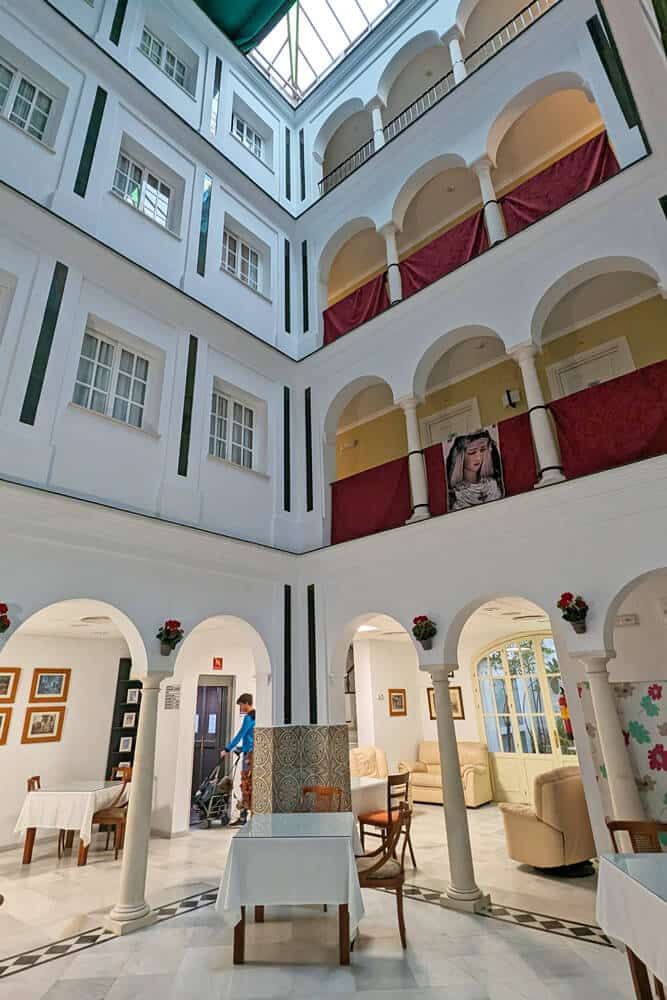
The hotel offers a selection of rooms, including family rooms, and welcomes pets, which meant our Labrador, Pinta, was able to join us for the trip. Small touches, such as having a water bowl ready in the room on arrival, made us feel genuinely welcome.
If you’re planning to spend a night or two in Écija rather than visiting on a day trip, staying in the historic centre allows you to enjoy the city once the day visitors have left and the streets become noticeably quieter.
Where to Eat in Écija
Écija has a surprisingly strong food scene for a city of its size, with everything from traditional tapas bars to more contemporary restaurants.
One thing that surprised us about Écija was how well we ate throughout the weekend. Compared with many of Andalusia’s better-known destinations, prices felt very reasonable and we found a good mix of traditional and contemporary options within the historic centre.
Ágora Tapas
Located close to the River Genil and San Pablo Park, Ágora Tapas serves traditional Andalusian dishes with a modern touch. The portions were particularly generous, making it a great option if you want to sample several dishes without breaking the budget.
We especially enjoyed the salmorejo, Russian salad and Iberian pork, although the menu changes regularly depending on seasonal ingredients.
María Castaña
For a more contemporary dining experience, María Castaña was our favourite evening restaurant in Écija.

The restaurant combines modern Andalusian cuisine with a stylish setting and a beautiful rooftop terrace that is particularly appealing during the warmer months. The menu is creative without feeling overly complicated, and the atmosphere strikes a good balance between relaxed and lively.
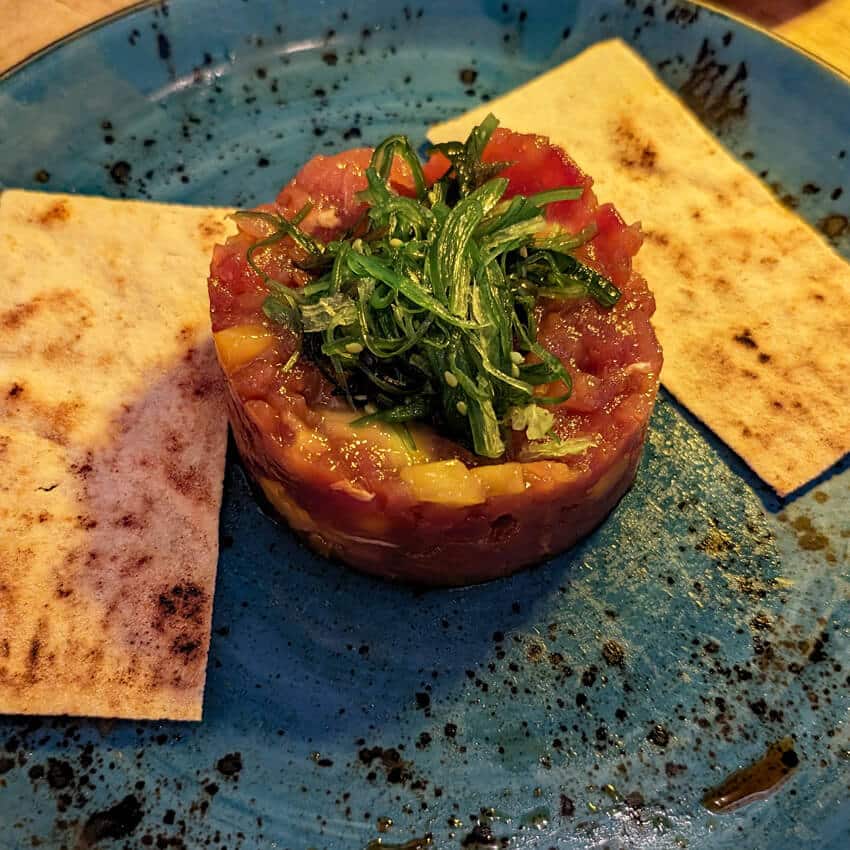


Churrería El Sevillano
For a classic Andalusian breakfast or afternoon treat, stop by Churrería El Sevillano near Plaza de España.
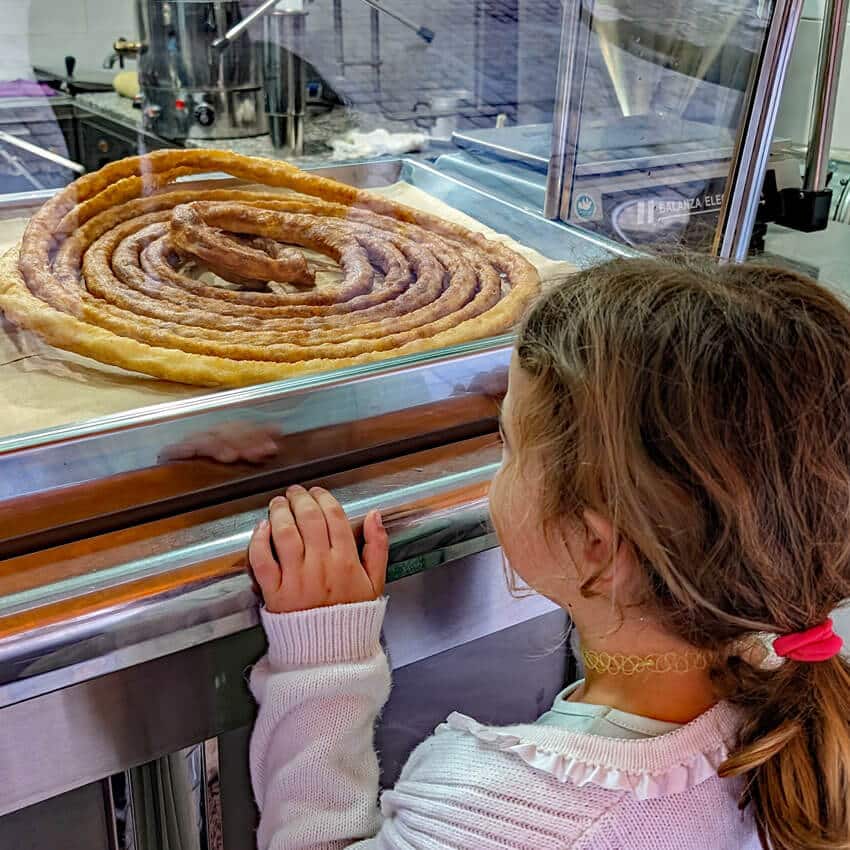
The churros are excellent and remain one of the most affordable snacks in the city, making this an easy stop while exploring the historic centre.
Restaurante Casa Machin
If you’re looking for a restaurant with character, Casa Machín was one of the most memorable places we ate during our time in Écija.

Set within a beautiful historic building, the restaurant unfolds through a series of traditional Andalusian courtyards, elegant dining rooms and atmospheric terraces, making it feel as much a sightseeing stop as a place to eat.
The menu focuses on well-executed Andalusian cuisine, and everything we tried was excellent. Even so, it was the setting that stayed with us most. Between the flower-filled patios, historic architecture and peaceful atmosphere, it’s the kind of restaurant that encourages you to slow down and linger over lunch or dinner.
If you’re only planning one special meal in Écija, Casa Machín is well worth considering.


Practical Information for Visiting Écija
When to Visit Écija
Écija can be visited year-round, but spring and autumn are generally the most pleasant times to explore the city on foot.
Spring brings warm temperatures and longer days, while autumn offers similar weather with fewer visitors. Both seasons are ideal for wandering the historic centre and enjoying outdoor cafés and terraces.
Summer can be extremely hot. Écija is sometimes known as “La Sartén de Andalucía” (The Frying Pan of Andalusia) and regularly records some of the highest temperatures in Spain. If you’re visiting between June and September, plan your sightseeing for the morning and evening and take advantage of the city’s shaded squares during the hottest part of the day.
Winter is typically mild and much quieter, making it a good time to visit if you prefer avoiding crowds.
How Long Do You Need in Écija?
It’s possible to see many of Écija’s main attractions in a single day, especially if you’re travelling between Seville and Córdoba.
That said, we think the city is best enjoyed over at least one night. Staying overnight allows you to explore at a slower pace, enjoy the restaurants and experience the atmosphere of the historic centre once the day visitors have left.
If you’re planning to visit nearby attractions such as El Coto de las Canteras or Osuna, a weekend is ideal.
Getting to Écija
Écija is located in the province of Seville, roughly halfway between Seville and Córdoba.
By car, the journey takes around 1 hour from Seville and 45 minutes from Córdoba, making it an easy day trip from either city. The town is accessed via the A-4 motorway, one of the main routes through inland Andalusia.
While public transport is available, having a car makes it much easier to explore nearby attractions such as El Coto de las Canteras, Osuna and the surrounding countryside.
Parking in Écija
The historic centre is compact and easy to explore on foot.
During our visit, we found free parking available along Avenida Miguel de Cervantes and Avenida de Andalucía, both within walking distance of the centre. There are also several paid car parks if you prefer to leave your vehicle closer to the main sights.
Once you’ve parked, most of Écija’s attractions can be reached on foot.
Things to Do Near Écija
Visit El Coto de las Canteras, the Petra of Andalusia
Just 30 minutes from Écija, El Coto de las Canteras is one of the most unusual places to visit in this part of Andalusia.
Often referred to as the “Petra of Andalusia”, this former sandstone quarry has become increasingly popular in recent years thanks to its monumental carved walls, which create a landscape unlike anywhere else in the region.

Despite the nickname, the site has its own unique identity. Walking through the vast quarry, surrounded by towering stone faces and dramatic rock formations, it’s easy to understand why it has captured so much attention.
We stopped on the way back to Málaga and found it well worth the detour. The visit doesn’t take long, making it an easy addition to a day exploring Écija and the surrounding countryside.
If you’re travelling through inland Andalusia, combining Écija and El Coto de las Canteras makes for an excellent day out.
Walk or Cycle the Vía Verde de la Campiña
The Vía Verde de la Campiña follows the route of a former railway line that once connected Marchena and Valchillón. Today, the traffic-free path offers a peaceful way to explore the countryside surrounding Écija on foot or by bike.
The full route stretches for 54 kilometres, but there’s no need to tackle the entire trail. Even a short section makes a pleasant escape from the city and offers a different perspective on the landscapes of the Sevillian countryside.
If you’re spending a weekend in Écija rather than visiting on a day trip, it’s a worthwhile addition to your itinerary.
Osuna
Osuna lies just a short drive away and is one of the most visited destinations in the province of Seville. Its monumental streets, university and impressive historic centre make it a worthwhile stop if you’re spending a few days in the area.
FAQ: Visiting Écija
Can you visit Écija without a car?
Yes. Écija can be reached by public transport from Seville and Córdoba, and once you’re in the city most attractions are within walking distance of each other. However, having a car makes it easier to explore nearby places such as El Coto de las Canteras and Osuna.
What are bizcochos marroquíes?
Bizcochos marroquíes are one of Écija’s best-known traditional pastries. They are made by the cloistered nuns of the Convent of Santa Florentina and are considered one of the city’s most distinctive local specialities.
What is the best time to visit Écija?
Spring and autumn are generally the most comfortable seasons for exploring the city. Summers can be extremely hot, with temperatures regularly among the highest in Spain, while winters are usually mild and quiet.
Is Écija a good day trip from Seville?
Absolutely. Écija is around an hour from Seville by car and makes an excellent day trip. Its location between Seville and Córdoba also makes it a convenient stop on a wider Andalusian road trip.
Why is Écija called the City of Towers?
The nickname comes from the eleven historic church towers that still rise above the city. Many were built or remodelled during the 17th and 18th centuries, when Écija was one of the wealthiest towns in Andalusia.
How much time do you need in Écija?
Most of the main sights can be visited in a day. However, we recommend spending at least one night in the city to enjoy the historic centre at a slower pace and experience its restaurants, squares and monuments without rushing.
Is Écija worth visiting?
Yes. Écija is one of the most interesting historic towns in inland Andalusia, offering Roman archaeological sites, impressive baroque architecture, excellent local food and a more relaxed atmosphere than many of the region’s better-known destinations.
What is Écija famous for?
Écija is best known as the City of Towers, thanks to its remarkable collection of baroque church towers that dominate the skyline. The city is also famous for its Roman heritage, elegant palaces and historic centre, which was declared an Artistic-Historic Site in 1966.
About the Authors:
This article was written by Lucía and Mike, the couple behind Andalusia Uncovered and the creators of Bloguera Viajera, one of Andalusia’s leading family travel websites, where we have spent years sharing our experiences exploring Spain and beyond.
Andalusia Uncovered grew from a simple idea: to create an English-language resource based on real experiences, not recycled travel advice. Every place we write about is somewhere we have personally visited, photographed and explored ourselves.
Lucía grew up in Spain and Mike moved here from England in 2010. Together, we have spent years discovering Andalusia’s cities, white villages, beaches, mountains and lesser-known corners, often with our two daughters in tow.
In a world increasingly filled with generic AI-generated content, we believe first-hand experience matters more than ever. Our aim is to provide honest recommendations, practical advice and genuine local insight to help you discover the real Andalusia for yourself.