
Everyone talks about Nerja, the iconic Balcón de Europa, and the nostalgia of Verano Azul.But just five minutes away, you’ll find something completely different.
Maro is a small, traditional village where life moves at a slower pace. Whitewashed houses line quiet streets, flowers spill from balconies, and there’s a feeling that time has gently paused.
If you’re looking for a calmer, more authentic alternative to Nerja for a relaxed weekend, Maro is exactly that kind of place. If, like me, you’re not great at sitting still, don’t worry. There are still plenty of things to see and do in Maro and its surroundings.
Table of Contents
Things to Do in Maro Málaga
Walking Through the Streets of Maro
Maro is small, but that’s exactly part of its charm. It’s the kind of place where you don’t need a plan. Just wander about through its quiet whitewashed streets, take your time, and look out for little details. Flower-filled balconies, traditional houses, and corners where life feels refreshingly slow.

If you can, peek out from one of the viewpoints or balconies. You’ll be rewarded with beautiful views stretching down towards the Mediterranean.
If you’re looking for a calmer and more authentic alternative to Nerja, this is where Maro really shines.
Enjoying a Drink on a Terrace
Don’t worry if you’re indecisive, there are only a handful of places to choose from, so you can easily try them all.
- Balcón de Maro sits right next to the church, with lovely views and a small square. It’s a great spot if you’re visiting with children, and the atmosphere is always relaxed.
- At the top of Calle Real, you’ll find Playa Maro, a restaurant and pizzeria linked to the hotel of the same name, set in a quiet pedestrian square.
- On the way into Maro from Nerja, you’ll pass the Hogar y Centro Social de Maro, which also has a café.
- Tucked away in the centre of the village is El Rincón de la Tapa, a more hidden local favourite.
Church of Our Lady of Wonders
At the end of Calle Real, you’ll come across the Church of Our Lady of Wonders.
You don’t need a map to find it. Just wander through the village and you’ll naturally arrive here.

It’s a small, simple church where you can step inside to see the Virgen de las Maravillas, the patron saint of Maro. The exterior is especially photogenic, with its white façade and peaceful setting.
Right next to it is the main square, where you’ll find a bar and lovely views towards the cliffs.
The Eagle Aqueduct
The Acueducto del Águila is one of the most recognisable landmarks in the area.
Built in the 19th century, it was originally used to transport water to a nearby sugar factory, whose ruins you can still spot from the road. Today, it continues to be used for irrigation.

You’ll likely see it as you drive between Maro and Nerja. There are small parking areas on both sides of the road, making it easy to stop briefly for a look and a few photos.
Watchtowers of Maro and Cerro Gordo
Along this stretch of coastline, you’ll spot several historic watchtowers, including those of Maro, Cerro Gordo and La Caleta. You can admire them from a distance, or incorporate them into a walk through the Acantilados de Maro-Cerro Gordo Natural Area.
The watchtower at Cerro Gordo is the easiest to reach, with a short walk leading to incredible panoramic views over the coastline. Here´s the link to more information about the route.
If you’re after something more adventurous, this area is also part of Stage 5 of the Gran Senda de Málaga, with routes to suit different levels.
Nerja Caves
Located between Maro and Nerja, the Cueva de Nerja is one of the most impressive natural attractions in southern Spain.
It’s suitable to visit with children, although some sections include stairs, so younger ones may need a bit of help.

Beyond the caves themselves, there’s also a museum and a relatively new virtual reality space. Throughout the year, they organise events and even theatrical visits.
If you’re visiting in summer, this is also a great way to escape the heat for a couple of hours. Just be prepared for the temperature when you step back outside.
💡 Practical tip:
You can buy a combined ticket with the Nerja tourist train. There’s also a free entry option from Monday to Friday at 9:30, but you must book 48 hours in advance. Only 60 tickets are released per day and they go quickly, so it’s worth planning ahead.
Maro-Cerro Gordo Cliffs: Beaches and Hidden Coves
One of the main reasons to visit Maro is its incredible natural setting. Just below the village lies the protected area of the Acantilados de Maro-Cerro Gordo Natural Area, a stretch of unspoilt coastline known for its dramatic cliffs, crystal-clear water and hidden coves.
This is one of the last truly wild coastal areas on the Costa del Sol, and it feels completely different from the more developed beaches nearby.
Playa de Maro
The most famous beach here is Playa de Maro, often considered one of the best beaches in Málaga province. It’s a wide natural beach surrounded by farmland and cliffs, with clear water that’s ideal for swimming and snorkelling.

Despite its popularity, it still retains a relatively untouched feel, especially outside the peak summer months.
💡 Good to know:
- Access is via a narrow road with limited parking
- In summer, it can get busy early in the day
- There are basic facilities and a beach bar during high season
Hidden Coves and Kayak Routes
Beyond Playa de Maro, the coastline is dotted with smaller coves that are only accessible on foot or by sea. One of the best ways to explore this area is by kayak, following the cliffs and discovering places you simply can’t reach otherwise.
Paddling along this coastline gives you a completely different perspective, with waterfalls, rock formations and quiet corners that feel almost untouched.
Where to stay in Nerja
If you’re looking for a fully relaxed weekend, staying in Maro is a great choice. It’s an even better option in high season, when nearby Nerja gets very busy.
We stayed in a three-bedroom holiday house booked through Booking for €115 per night, right on Calle Real. Everything felt new and although it was missing a few small details in terms of equipment, we really enjoyed our stay.

The highlight was the outdoor space. At the back of the house there’s a garden with a pool, a small barbecue area and a terrace with beautiful views towards the Sierras of Tejeda, Almijara and Alhama Natural Park.
There’s no private parking, but there are two public car parks in Maro for around €1 per day. If you’re lucky, you might also find a space on the street, as we did.
If you’re planning to visit Playa de Maro, this location works really well. The bus stops that take you down to the beach are just a five-minute walk away.
Apartments and Hotels in Maro
For such a small village, Maro has a surprisingly good range of accommodation options.
In the lower part of the village, just opposite the church, you’ll find:
In the upper part of Maro:
If you prefer a hotel stay:
- Casa Maro in the lower part of the village
- Apartahotel Playamaro in the upper area
And of course, there are plenty of holiday rental houses available throughout the village, which are ideal if you’re travelling as a family or looking for more space.
Maro is small enough to visit in a few hours, but staying overnight allows you to experience a quieter and more authentic side of the village, especially early in the morning or in the evening.
What to See Near Maro
One of the best things about staying in Maro is its location. Within just a few minutes, you can explore some of the most beautiful spots on the eastern Costa del Sol.
Nerja
Just five minutes away, Nerja is one of the most popular destinations in the area.
Don’t miss the iconic Balcón de Europa, with its panoramic views over the Mediterranean, or a walk through the old town and its beaches.

It’s a great contrast to Maro, more lively, more developed, but still full of charm.
Frigiliana
Around 15 minutes inland, Frigiliana is often considered one of the most beautiful white villages in Andalusia.

Its steep streets, whitewashed houses and colourful doors make it perfect for a slow wander and some incredible photos.
Cómpeta
A little further into the mountains, Cómpeta offers a different perspective of the region.
Set within the Sierras of Tejeda, Almijara and Alhama Natural Park, it’s known for its peaceful atmosphere, traditional feel and beautiful views over the surrounding countryside.
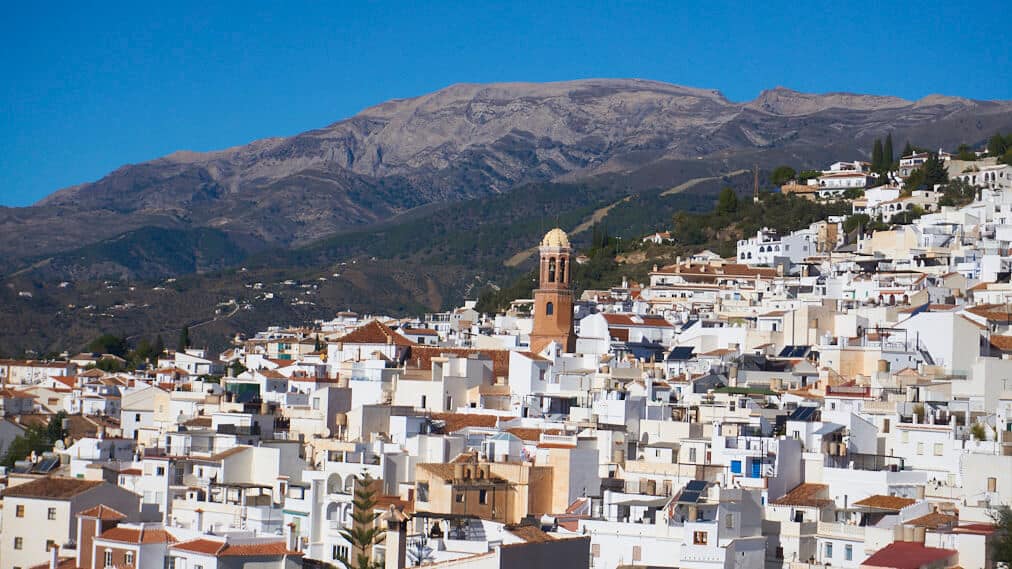
It’s a great option if you want to explore a more rural side of Málaga, away from the coast.
Is Maro Worth Visiting?
Absolutely. Maro is one of those places that still feels genuinely local. Small, peaceful and full of character, it offers a completely different experience to nearby Nerja.
What makes it special is the contrast. Within minutes, you can go from quiet village streets to one of the most unspoilt stretches of coastline in southern Spain, the Acantilados de Maro-Cerro Gordo Natural Area.
It’s the kind of place that works whether you have just a few hours or a full weekend. You can wander without a plan, stop for a drink in a sunny square, and end the day by the sea.
If you’re exploring this part of Andalucía, Maro is well worth adding to your itinerary.
Keep Exploring Andalucía
If you enjoyed this guide, you might also like:
- 👉 Our one day guide to Malaga city
- 👉 Discover Cómpeta, one of the most beautiful white villages in the region
- 👉 Explore more hidden gems across Málaga.
About the Authors:
This article was written by Lucía and Mike, the couple behind Andalusia Uncovered and the creators of Bloguera Viajera, one of Andalusia’s leading family travel websites, where we have spent years sharing our experiences exploring Spain and beyond.
Andalusia Uncovered grew from a simple idea: to create an English-language resource based on real experiences, not recycled travel advice. Every place we write about is somewhere we have personally visited, photographed and explored ourselves.
Lucía grew up in Spain and Mike moved here from England in 2010. Together, we have spent years discovering Andalusia’s cities, white villages, beaches, mountains and lesser-known corners, often with our two daughters in tow.
In a world increasingly filled with generic AI-generated content, we believe first-hand experience matters more than ever. Our aim is to provide honest recommendations, practical advice and genuine local insight to help you discover the real Andalusia for yourself.