
La Línea de la Concepción is often seen as nothing more than the gateway to Gibraltar. A place you pass through, park the car, or sleep over before crossing the border. But that would be a mistake.
Spend a little time here and you’ll discover a coastal town with a strong identity of its own: long sandy beaches facing both the Mediterranean and the Atlantic, a lively local food scene, wide promenades made for sunset walks, and a very real, very Andalusian way of life.

We’ve stayed in La Línea several times, sometimes as a base for visiting Gibraltar, other times simply to enjoy its beaches and relaxed pace. And each visit has shown us the same thing: this is a town that deserves to be explored in its own right, not rushed through.
In this guide, we’ll show you what to see and do in La Línea de la Concepción, where to eat well, where to walk, and why it’s worth adding at least one full day to your plans.
Table of Contents
1. Discover La Línea by Day with a Free Guided Tour
One of the best ways to get to know the city is by joining a free guided walking tour organised by Turismo de La Línea. In around two hours, you’ll explore key spots across La Línea while learning about its history, local life, and food culture—an easy, insightful way to start your visit and see the city through local eyes.

2. Morning Tapas at Mercado Provisional 20 de Abril
Just a short walk from the Gibraltar border, Mercado Provisional 20 de Abril is where La Línea’s everyday life really comes alive. This temporary market runs along a long street lined with food stalls and small bars, and it’s the perfect place to sample the kind of morning tapas that have earned the town its reputation as one of the best places to eat well in the province.

You’ll see locals doing their daily shopping while you stop for a bite: fresh fish laid out on ice, butchers working behind the counter, voices overlapping, and that unmistakable buzz of a real Andalusian market. There’s nothing polished or “gourmet” about it—and that’s exactly the charm. Prices are refreshingly down-to-earth, and the food speaks for itself.
We stopped at Bar Carlos y Eduardo, where we ate extremely well and were looked after brilliantly. A simple, honest place that captures the spirit of La Línea’s food scene perfectly.
3. Parque Princesa Sofía, La Línea de la Concepción
One of the most pleasant green spaces in town is Parque Princesa Sofía. It’s a relaxed place to wander, with a few standout features that make it well worth a stop.

The star of the park is the Drago Centenario, an impressive centuries-old dragon tree that has become a local symbol. Scattered around the park you’ll also find several historic bunkers—some of them can be visited—reminders of La Línea’s strategic past. If you’re travelling with children, there are playgrounds too, so chances are you’ll end up stopping for a while. The upside? The views of the Rock of Gibraltar rising behind the park make the wait much more enjoyable.
If you’re not visiting with kids, you can easily skip the playgrounds, but don’t miss the dragon tree or the bunkers—they’re genuinely interesting.

It’s worth noting that, for now, the bunkers can only be visited as part of a guided tour, like the one we did with the local tourist office, which adds plenty of context and stories you’d otherwise miss.
4. Cruz Herrera Museum, La Línea de la Concepción
If you join the guided tour, Blanca will take you to the most important museum in town: Museo Cruz Herrera. It’s a beautiful art gallery set inside an elegant villa that feels like a small oasis in the middle of the city.

Alongside works by the local painter José Cruz Herrera, the museum also hosts temporary exhibitions and unexpected highlights. When we visited, there was an impressive butterfly collection on display—absolutely fascinating, especially for kids. África couldn’t take her eyes off it.

Even if you’re not usually big on museums, this one is calm, compact and very well curated, making it an easy and rewarding stop while exploring La Línea.
5. Tea time in La Línea… with a japonesa
Yes, we’re right next to Gibraltar, and as you can imagine, the British tea time tradition is taken very seriously around here. La Línea is packed with cafés, and many of them fill up quickly—locals know exactly where to go.

You really shouldn’t skip this ritual: order a tea or coffee and pair it with a japonesa, one of La Línea’s most iconic pastries. It’s a fried, honey-coated sweet filled with either cabello de ángel (pumpkin jam) or custard. Proper comfort food, and dangerously moreish.
Don’t worry about the calories just yet—there’s still plenty of exploring to do, and you’ll be glad of the extra energy that a japonesa provides.
6. Strolling along Umbrella Street and Crochet Street
Officially, these streets are Calle del Coronel Cadalso (better known as Umbrella Street) and Calle de las Flores (the one everyone calls Crochet Street).

From June to September, the town council decorates them as a colourful tourist attraction—and honestly, they’ve done a great job. The result is cheerful, creative and very photogenic, so you’re almost guaranteed to leave with a couple of Instagram-worthy shots.

And since we’re talking about streets, don’t miss Calle Real either. It may not be dressed up with installations, but it’s one of La Línea’s most important streets and a great place to get a feel for everyday local life as you wander through the city.
7. Evening tapas crawl in the centre of La Línea de la Concepción
Yes—tapas in the morning and tapas at night. That’s La Línea for you. Its reputation for great, honest tapas is well deserved.

We followed recommendations from Blanca (our morning tour guide) and a close friend of Mike’s—and both lists overlapped a lot, which tells you everything.
We started early (very British timing 😄) to avoid the weekend crowds, especially as we were out with kids. First stop: a quick beer on Calle Hércules, home to two wonderfully characterful spots—Tabanco La Sacristía and Bar La Chicota—each with its own personality.

At exactly 8:30 pm we made a beeline (literally ran) to La Chimenea, tucked just behind Plaza de la Constitución. We arrived at 8:33 pm and, while I hesitated to snap a photo of the façade, we grabbed the last available spot. Three minutes late—and almost no tapas for us. That’s how popular it is.

So here’s the golden tip: book ahead, especially if you want an early slot—they do take reservations then. We got lucky with a tiny bit of bar space outside (two stools and a gap for the kids), but it was absolutely worth it.


Another lively area for dinner is Plaza Fariñas. One of the most talked-about places there is Bodebar, which we’ve saved for next time.
And if you still have energy for a drink after dinner, head to Plaza Cruz Herrera, right by Umbrella Street. It’s a quirky little square with a brilliant atmosphere once the sun goes down—an ideal way to round off the night.
8. The beaches of La Línea de la Concepción
It’s not all about food, so sooner or later you’ll want to cool off at one of the beaches around La Línea de la Concepción.

From the Rock towards Cádiz, you’ll find Playa de Poniente. Heading in the opposite direction, towards Málaga, is Playa de Levante. Both beaches offer impressive views of the Rock of Gibraltar, and on a clear day you can also watch the huge cargo ships crossing the Strait.
We stopped for a drink at Chiringuito Caramba, which has a relaxed, slightly bohemian atmosphere that reminded us a lot of Tarifa.

Continuing east towards Málaga, you’ll reach Playa de la Atunara, a much quieter beach that tends to stay fairly calm even on summer Sundays.
A little further on is La Alcaidesa, which is probably my favourite beach in the area. It sits between residential areas but still feels quite wild, with a long stretch of sand and just a few beach bars. Parking can be a bit tricky in some spots, so it’s best to arrive early — but it’s absolutely worth the effort.
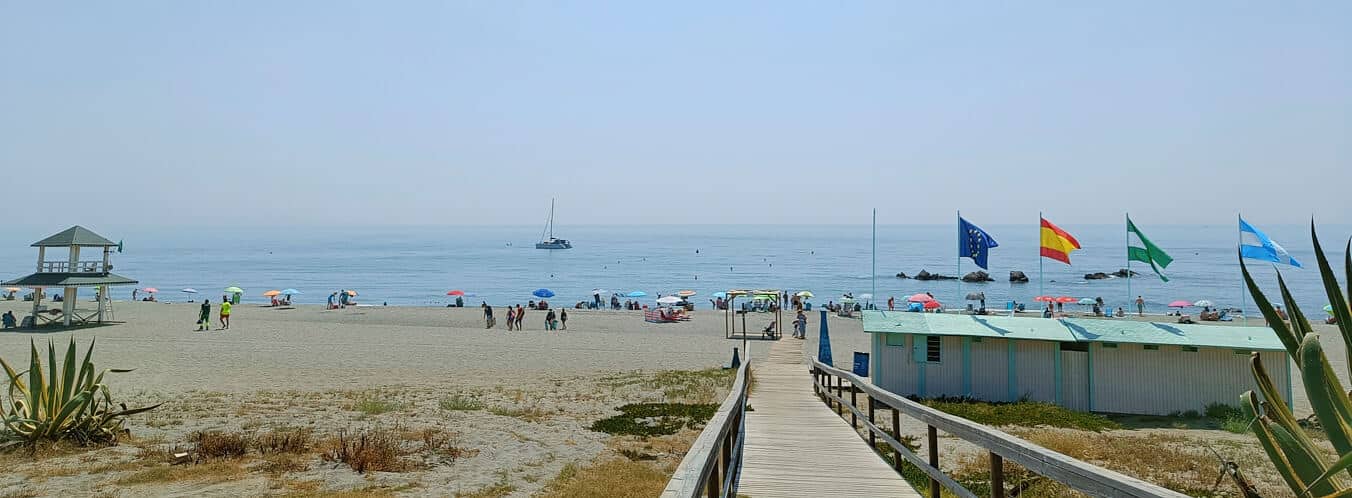
On the way from La Línea to La Alcaidesa you’ll pass Mirador del Higuerón. If the day is clear, you’ll get lovely views over the Rock of Gibraltar and the bay. It’s not really worth driving here just for the viewpoint, but if you’re passing by anyway, it’s a nice place to stop briefly and take it all in.
9. Fuente de Santa Bárbara
On the outskirts of La Línea de la Concepción, right by the beach, you can visit the Fuente de Santa Bárbara, a coastal fortification that once formed part of the Gibraltar Contravallation Line.
It has been declared a Site of Cultural Interest (Bien de Interés Cultural) and, while its state of preservation isn’t perfect, it’s still well worth a visit for its historical value and seaside setting.
Access is free and open, making it an easy stop if you’re exploring the coastline or heading towards the beaches nearby.
10. Iglesia del Carmen (La Atunara)
One of the most photogenic scenes in La Línea is the Iglesia del Carmen in the fishing district of La Atunara. Its blue-and-white façade sits almost on the sand itself, facing the sea, with the Rock of Gibraltar rising dramatically in the background.
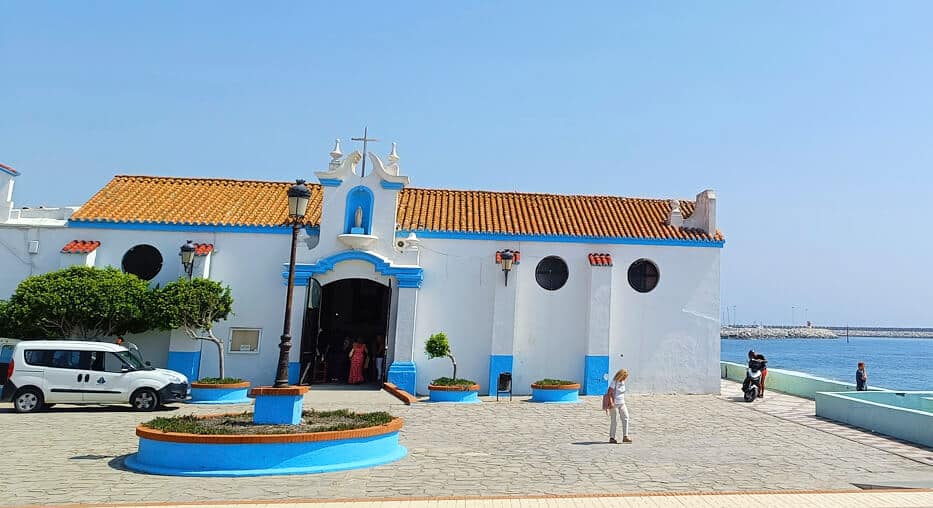
If you wander a little further into the neighbourhood, you’ll spot local women drying fish at their stalls—a traditional practice that’s still very much alive here. And no, it’s not herring: it’s flying fish, a local speciality unique to this area and traditionally eaten dried.
A simple, authentic corner that perfectly captures La Atunara’s maritime soul.
Where to stay in La Línea de la Concepción
To enjoy everything La Línea has to offer without rushing, it’s well worth staying at least one night. That way you can explore the town at an easy pace—and trust us, it deserves it.
Our top recommendation is Boat Haus, a set of floating houseboats moored in Puerto de la Alcaidesa, very close to the Gibraltar border. From here, you can walk into La Línea’s centre and reach many of the main sights on foot.

These floating homes are fully equipped, comfortable and genuinely different. Staying on a houseboat is an experience in itself—and one that families love—but it’s just as appealing for couples looking for something a little out of the ordinary. Falling asleep on the water and waking up with the marina around you is not something you get to do every day.
We’ve stayed here ourselves and loved it. If you’re curious, we’ve shared our full experience in a dedicated post about sleeping at Boat Haus.
Final thought
It’s also worth addressing something you may have read before coming. La Línea de la Concepción sometimes appears in the press linked to issues around drug trafficking in the wider Campo de Gibraltar area. But honestly, don’t let that put you off.
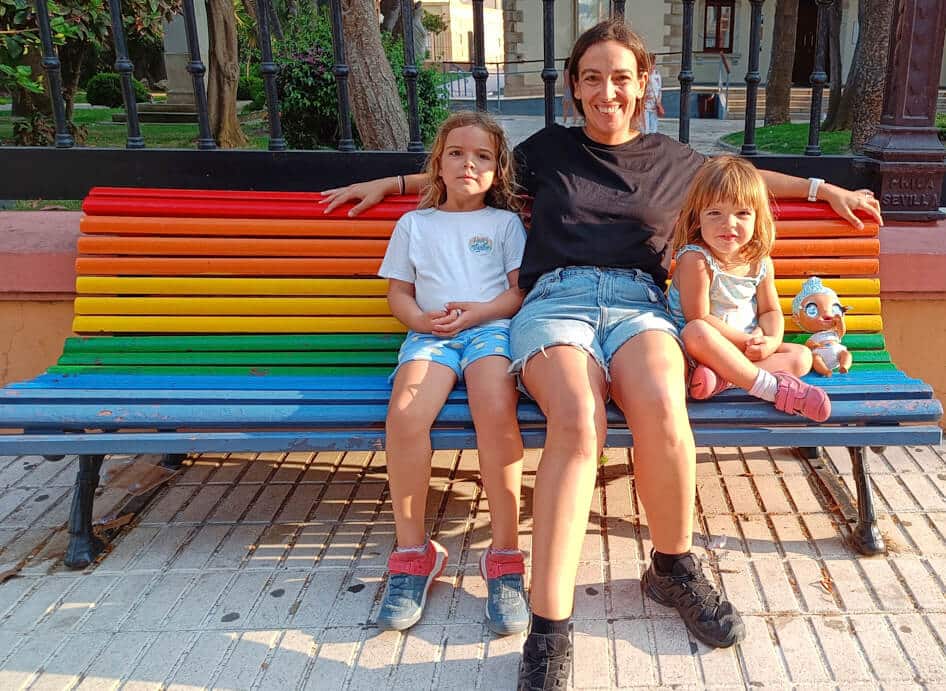
Our experience couldn’t have been more different. We found a friendly, laid-back town with a strong local identity, great food, lively streets and people who make you feel genuinely welcome from the first moment. We explored the centre by day and night, visited markets, parks and beaches, went out for tapas, and never once experienced anything remotely connected to that reputation.
So go with an open mind. Take your time, enjoy the atmosphere, talk to locals, eat well, walk by the sea… and let yourself be surprised. La Línea de la Concepción deserves to be discovered for what it really is, not for the headlines.
If you’re planning to cross the border, don’t miss our one-day guide to Gibraltar. It’s the perfect complement to a stay in La Línea and an easy, fascinating day trip just a short walk away.
FAQ
Is La Línea de la Concepción safe to visit?
Yes. Despite its occasional negative reputation in the media, La Línea is a welcoming and easy-going town. We explored it on foot, with children, both during the day and at night, and felt comfortable at all times.
How much time do you need to visit La Línea?
One full day is enough to see the highlights, but staying overnight allows you to enjoy the tapas scene, beaches and relaxed evening atmosphere without rushing.
Is La Línea worth visiting if you’re going to Gibraltar?
Absolutely. It’s a great base for visiting Gibraltar and offers a more local, authentic Andalusian experience, with excellent food and better value accommodation.
Do you need a car to visit La Línea?
Do you need a car to visit La Línea?
Where does the name La Línea de la Concepción come from?
Where does the name La Línea de la Concepción come from?
The name comes from the Line of Contravallation of Gibraltar, a defensive system of forts and walls built by Spain in the 18th century to surround Gibraltar. These fortifications formed a literal line (“línea”) across the isthmus. The reference to “la Concepción” honours the Immaculate Conception, a Catholic devotion widely present in Spain at the time. The town gradually grew around this military line and kept the name, which reflects its strategic origins and close link to Gibraltar.
About the Authors:
This article was written by Lucía and Mike, the couple behind Andalusia Uncovered and the creators of Bloguera Viajera, one of Andalusia’s leading family travel websites, where we have spent years sharing our experiences exploring Spain and beyond.
Andalusia Uncovered grew from a simple idea: to create an English-language resource based on real experiences, not recycled travel advice. Every place we write about is somewhere we have personally visited, photographed and explored ourselves.
Lucía grew up in Spain and Mike moved here from England in 2010. Together, we have spent years discovering Andalusia’s cities, white villages, beaches, mountains and lesser-known corners, often with our two daughters in tow.
In a world increasingly filled with generic AI-generated content, we believe first-hand experience matters more than ever. Our aim is to provide honest recommendations, practical advice and genuine local insight to help you discover the real Andalusia for yourself.