
There’s a side of Granada that feels almost otherworldly. A landscape shaped by time, silence and earth itself. Welcome to the Gorafe desert, one of the most unique areas within the Granada Geopark.
This UNESCO-recognised region is home to the highest concentration of megalithic monuments in Europe, where prehistoric dolmens sit quietly among dramatic badlands that look more like a small-scale Grand Canyon than southern Spain. It’s a place where you don’t just visit… you step back in time.
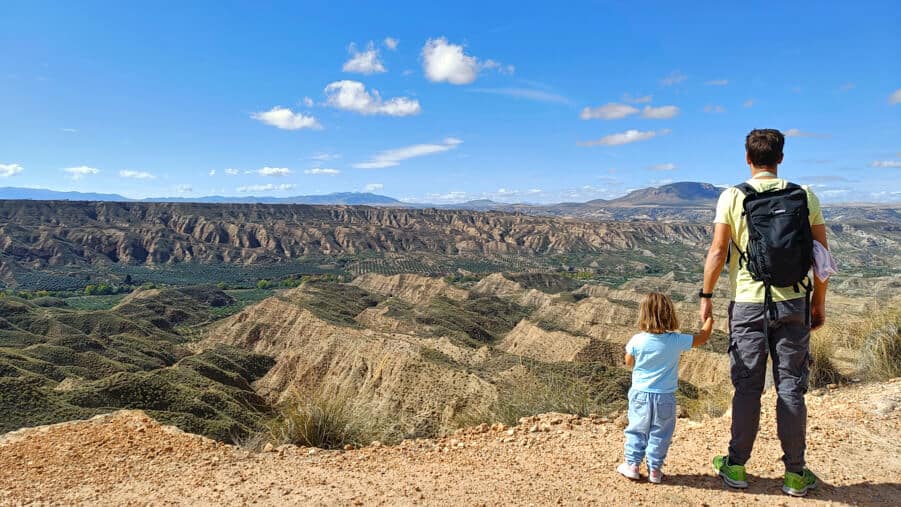
But Gorafe is more than its history. Here you can sleep inside a cave house, float above the desert in a hot air balloon, or simply look up and experience one of the clearest night skies in Andalusia, officially recognised as a Starlight destination.
So if you’re looking to discover a different side of Andalusia, far from the usual routes, this is it.
Are you ready to travel into the heart of the earth?
Table of Contents
What is the Granada Geopark?
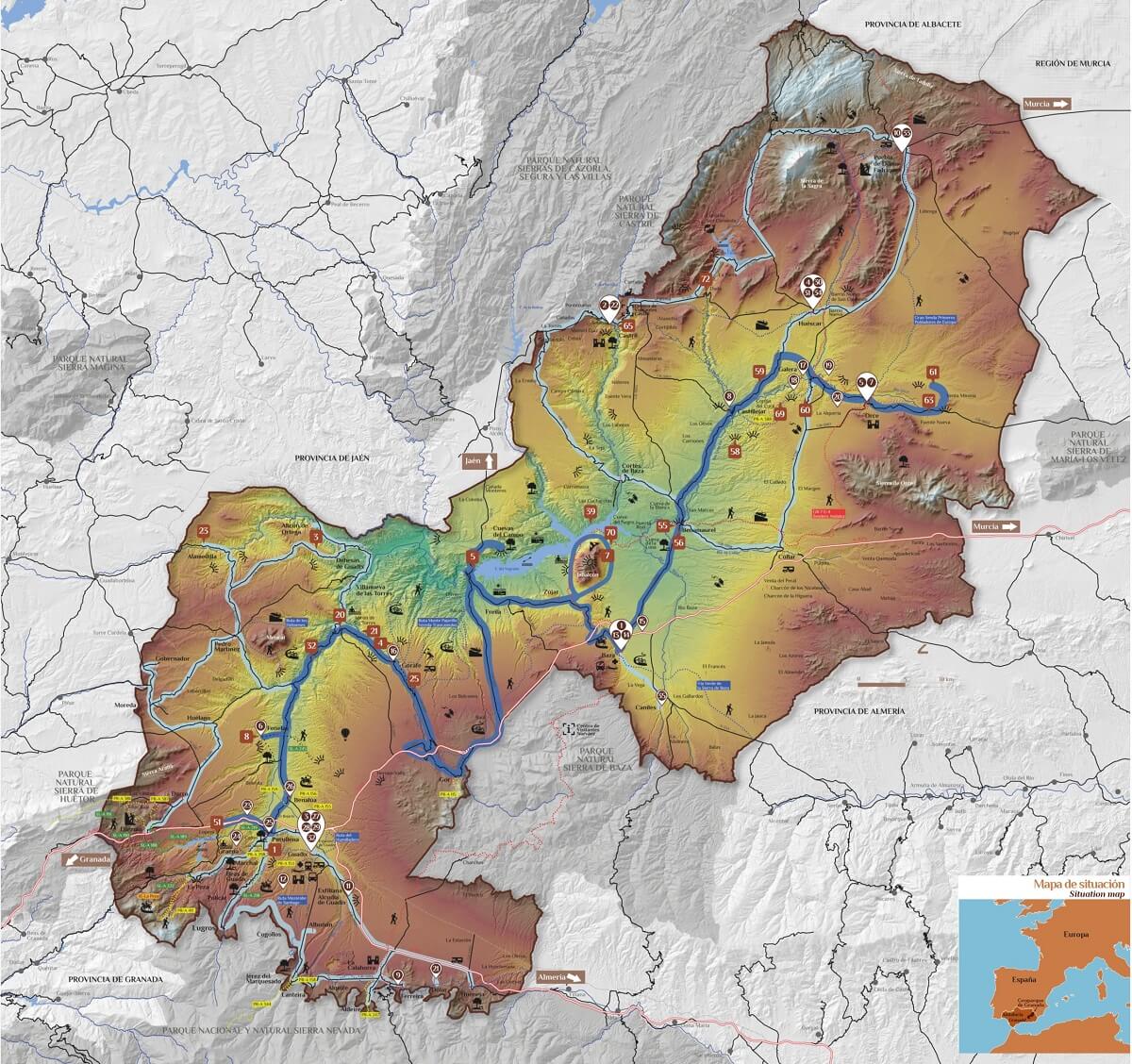
The Granada Geopark is one of the most fascinating and least understood landscapes in southern Spain. Stretching across the north-east of the province, it covers an immense territory of over 4,700 km² and includes 47 municipalities across the regions of Guadix, Baza, Huéscar and Montes.
But this isn’t just a place on the map. It’s a landscape shaped over millions of years, where geology, history and human life are deeply intertwined.
A landscape shaped by time
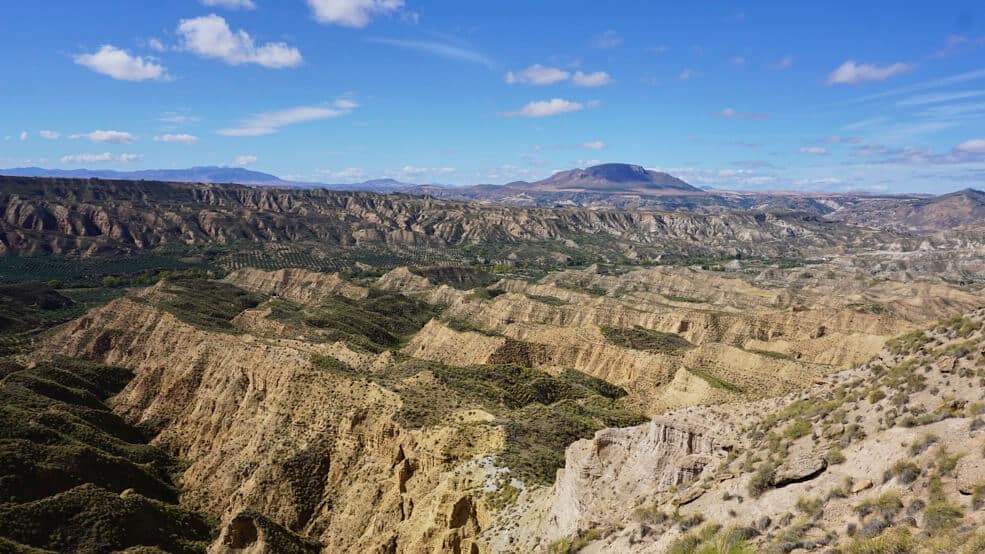
What makes the Granada Geopark so unique is its geological story. Millions of years ago, this entire area was an inland basin with no outlet to the sea, where rivers fed into a vast lake. Over time, erosion carved through the land, creating the dramatic badlands, canyons and valleys you see today.
The result is one of the most striking desert-like landscapes in Europe. Layers of sediment stretch across the horizon, forming a natural open-air museum where you can quite literally read the history of the earth.

A UNESCO-recognised territory
In 2020, the Granada Geopark was officially recognised as part of the UNESCO Global Geoparks network. This designation is not just about natural beauty. It reflects the importance of protecting a territory where geological heritage, cultural identity and sustainable tourism come together.
It’s also a place where some of the oldest human remains in Europe have been discovered, and where traditional ways of life still shape the rhythm of daily life.

What can you expect to find?
This is not a destination you “tick off” in a day. The Geopark is vast, and the best way to explore it is slowly, focusing on one area at a time.
In the southern part, around Gorafe and Guadix, you’ll find some of the most iconic landscapes: deep gullies, dramatic viewpoints and one of the largest concentrations of dolmens in Europe. Other areas, like Baza or Huéscar, offer equally unique scenery, from high plateaus to the striking “white desert” landscapes.
Across the Geopark, you can:
- Walk or cycle through surreal badlands landscapes
- Visit interpretation centres to understand the geology and history
- Discover prehistoric dolmens scattered across the territory
- Sleep inside traditional cave houses carved into the earth
- Experience local gastronomy rooted in the land
- Take part in unique activities like 4×4 routes or hot air balloon flights
A different kind of Andalusia
What we love most about this part of Granada is how untouched it feels. This is Andalusia at its most authentic, where tourism hasn’t taken over and life still moves at a slower pace.
If you’re drawn to places where landscapes tell stories, where you can sit in a quiet village square and feel time slow down, then you’ll feel right at home here.
And within all of this, Gorafe stands out as one of the most extraordinary corners of the entire Geopark… which is exactly where we’re heading next.
Gorafe: The Heart of the Geopark
Set within the dramatic landscapes of the Granada Geopark, the small village of Gorafe sits quietly in the Gor Valley, around 100 km from Granada city. With a population of just a few hundred people, it’s one of those places that feels both remote and deeply connected to the land around it.
And yet, despite its size, Gorafe is one of the most important and fascinating areas in the entire Geopark.
A village surrounded by history
What makes Gorafe truly special is what lies beyond the village itself. Spread across the surrounding landscape is one of the largest concentrations of prehistoric dolmens in Europe, with over 200 megalithic structures dating back more than 5,000 years.
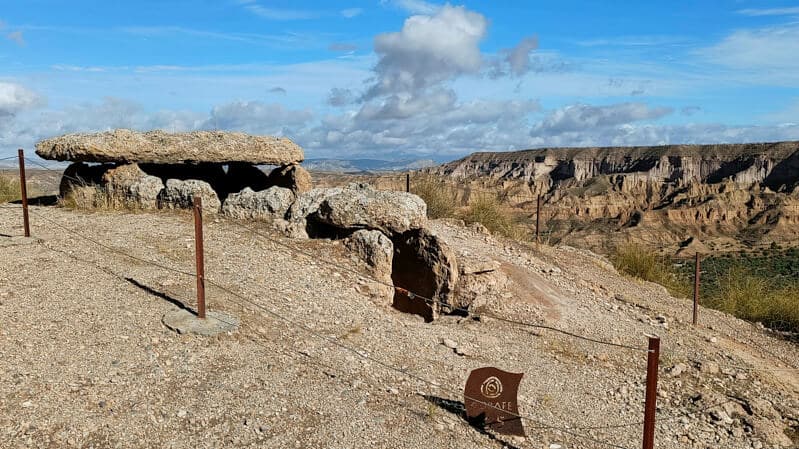
These ancient burial sites are scattered across a landscape of badlands, canyons and open valleys, creating a setting that feels almost cinematic. It’s the kind of place where every viewpoint tells a story, and where history and nature blend seamlessly together.
Our base to explore the Geopark
We chose Gorafe as our base to explore the southern part of the Geopark and it turned out to be one of the best decisions of the trip.
It’s a small village, the kind you can walk across in minutes, but its location is exceptional. You’re right in the middle of some of the most striking landscapes in the region, with easy access to viewpoints, hiking routes and archaeological sites.
And then there’s the experience of staying in a cave house. Arriving and seeing the village carved into the earth, with homes built directly into the rock, is something quite special. It’s one of those moments where you realise this isn’t just another destination, it’s something completely different.

Slow travel, Gorafe style
One of the things we loved most about Gorafe wasn’t just what we saw, but how we experienced it.
Yes, there are plenty of places to visit and things to do. But some of the best moments came when we simply slowed down. Sitting at a local bar, watching daily life unfold, chatting with locals, and letting the kids play without a plan.
Gorafe has that rare quality. It invites you to pause, to look around, and to connect with a quieter, more authentic side of Andalusia.
What to see and do in Gorafe
Despite its size, Gorafe offers a surprising number of experiences, both in the village itself and in the surrounding landscape.
Megalithic Interpretation Centre
If you want to understand what makes this area so unique, start here.

The interpretation centre is designed to reflect the shape of a prehistoric tomb and uses interactive exhibits and audiovisual displays to bring the history of the region to life. It’s especially worthwhile if you’re visiting with children, as it helps make sense of everything you’ll see later out in the landscape.
Viewpoint of the Virgen de Fátima
Perched above the village, this viewpoint offers one of the best panoramic views over Gorafe and the surrounding canyon-like terrain.

It’s particularly special at sunrise and sunset, when the light transforms the landscape, but it’s equally impressive at night. With almost no light pollution, this is a place where the stars truly take over the sky.
Los Coloraos and the Don Diego Viewpoint
This is where Gorafe reveals its most dramatic side.
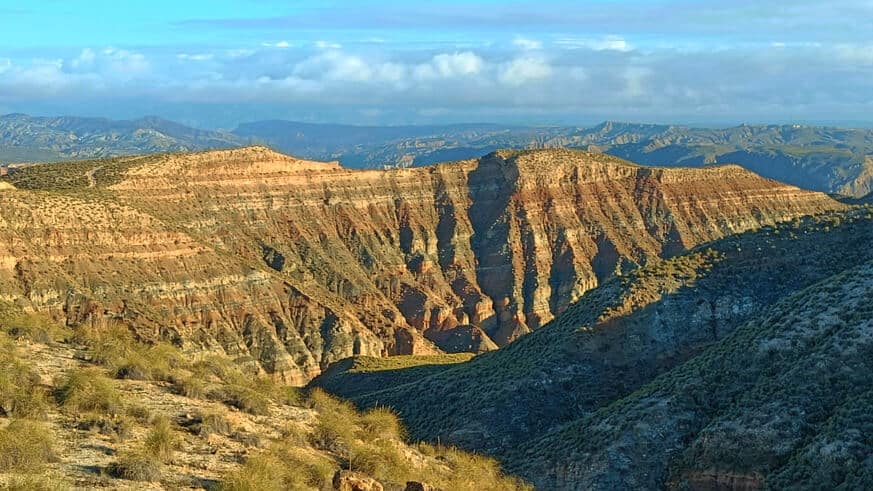
The area known as Los Coloraos is a striking badlands landscape shaped by erosion over millions of years. Red and ochre tones dominate the terrain, forming deep gullies and wide open spaces that genuinely feel reminiscent of the Grand Canyon, just on a smaller scale.

The Don Diego viewpoint is one of the best places to take it all in. It’s accessible by car via a dirt track (generally manageable in normal conditions), and the views are absolutely worth the journey.
Hiking, cycling and 4×4 routes
If you want to explore further, there are plenty of ways to do it.
Mountain biking is one of the most immersive ways to experience the landscape, but there are also accessible walking routes for all levels. For those looking to reach more remote areas, guided 4×4 tours are a great option and allow you to discover places that would otherwise be difficult to access. But you can drive quite a way into the park on the track in a normal car
Here´s one of my routes that left me with a smile ear to ear.
And a little video to give you an idea of what its like…. space so much space!
Acequia del Toril and Alicún Thermal Springs
A short drive from Gorafe, this is one of the most unexpected landscapes in the area.

Here, mineral-rich waters have created a series of natural formations along an ancient irrigation channel, with walls reaching several metres high. The walk alongside the acequia is easy and suitable for families, with tunnels and elevated sections that make it particularly fun for children.
At the end of the route, you’ll find thermal pools where you can relax in naturally warm waters. Here´s the location in Google Maps.
Stargazing in Gorafe
Gorafe is officially recognised as a Starlight destination, which means exceptionally low light pollution and some of the clearest night skies you’ll find in Andalusia. On a clear night, the sky comes alive with stars, constellations and even distant galaxies visible to the naked eye.

You can easily enjoy it on your own just step outside, let your eyes adjust, and look up. That’s often more than enough to experience the magic.
But if you want to take it a step further, the Complejo Astronómico Los Coloraos offers a much more immersive experience. With professional telescopes and guided sessions, you’ll not only see more, but understand what you’re looking at.
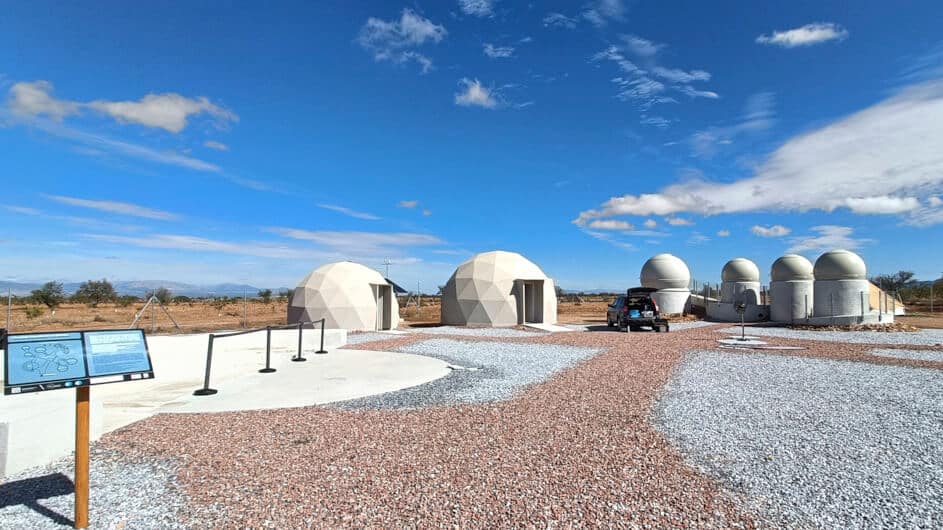
For couples, it’s an unforgettable experience. For families, it’s both fun and surprisingly educational.
And for anyone visiting Gorafe, it’s one of those moments that stays with you long after the trip ends.
Where to Stay in the Granada Geopark
A cave stay in Gorafe
If you’re planning to explore this part of the Granada Geopark, basing yourself in Gorafe is a fantastic choice.
And if there’s one experience we’d recommend without hesitation, it’s this: stay in a cave house.

More than just accommodation, it’s part of the identity of this region. These traditional homes carved into the earth stay naturally cool in summer and warm in winter, making them not only unique, but surprisingly comfortable all year round. For families, it’s also something genuinely memorable, one of those experiences that children (and adults) talk about long after the trip.
For us, it was one of the highlights of the visit.
FAQ
How long do you need in Gorafe?
You can see the main highlights in half a day, but we’d strongly recommend staying at least one night. It allows you to slow down, explore the surroundings properly and experience the incredible night skies.
If you really want to discover the area in depth, including viewpoints, dolmens and nearby routes, a full weekend is ideal.
When is the best time to visit Gorafe?
Spring and autumn are ideal, with pleasant temperatures and beautiful light. Summer can be very hot, while winter offers quieter landscapes and crisp, clear skies (it does get cold).
Is Gorafe crowded?
Not at all. That’s part of its charm. It remains one of the least touristy and most authentic destinations in the region.
Is Gorafe suitable for families?
Yes, it’s a great destination with kids. There are easy walks, open spaces to explore, and places like the Megalithic Interpretation Centre that make the visit both fun and educational.
Do you need a 4×4 to visit Gorafe?
No, you can reach Gorafe and many viewpoints with a normal car. However, some tracks and more remote areas are easier to access with a 4×4 or on a guided tour.
Conclusion
Gorafe is one of those places that stays with you.
Not just for its dramatic landscapes, but for the feeling of stepping somewhere quieter, more authentic, and deeply connected to the land. From prehistoric dolmens to cave houses and star-filled skies, everything here invites you to slow down and experience a different side of Andalusia.
For us, basing ourselves in Gorafe to explore the Granada Geopark was a real highlight. If you can, stay the night. That’s when Gorafe truly comes alive.
Fancy a completely different side to Granada? Check out Lanjarón a town with a lot of water.
About the Authors:
This article was written by Lucía and Mike, the couple behind Andalusia Uncovered and the creators of Bloguera Viajera, one of Andalusia’s leading family travel websites, where we have spent years sharing our experiences exploring Spain and beyond.
Andalusia Uncovered grew from a simple idea: to create an English-language resource based on real experiences, not recycled travel advice. Every place we write about is somewhere we have personally visited, photographed and explored ourselves.
Lucía grew up in Spain and Mike moved here from England in 2010. Together, we have spent years discovering Andalusia’s cities, white villages, beaches, mountains and lesser-known corners, often with our two daughters in tow.
In a world increasingly filled with generic AI-generated content, we believe first-hand experience matters more than ever. Our aim is to provide honest recommendations, practical advice and genuine local insight to help you discover the real Andalusia for yourself.