
Lanjarón smells of fresh spring water and crisp mountain air. But don’t be fooled: this jewel of the Alpujarra is far more than its famous water. It’s a place where history, mountain traditions, wild fiestas, hiking trails and a thermal spas come together.
We’ve visited Lanjarón several times, and it still manages to surprise us. Some trips have been pure relaxation at the spa; others, full of adrenaline during the legendary San Juan Water Fight — or out cycling and hiking in the Sierra Nevada National Park.
In this guide, we’ll share what to see and do in Lanjarón, based on our own experiences, so you can plan your visit and enjoy it just as much as we have.
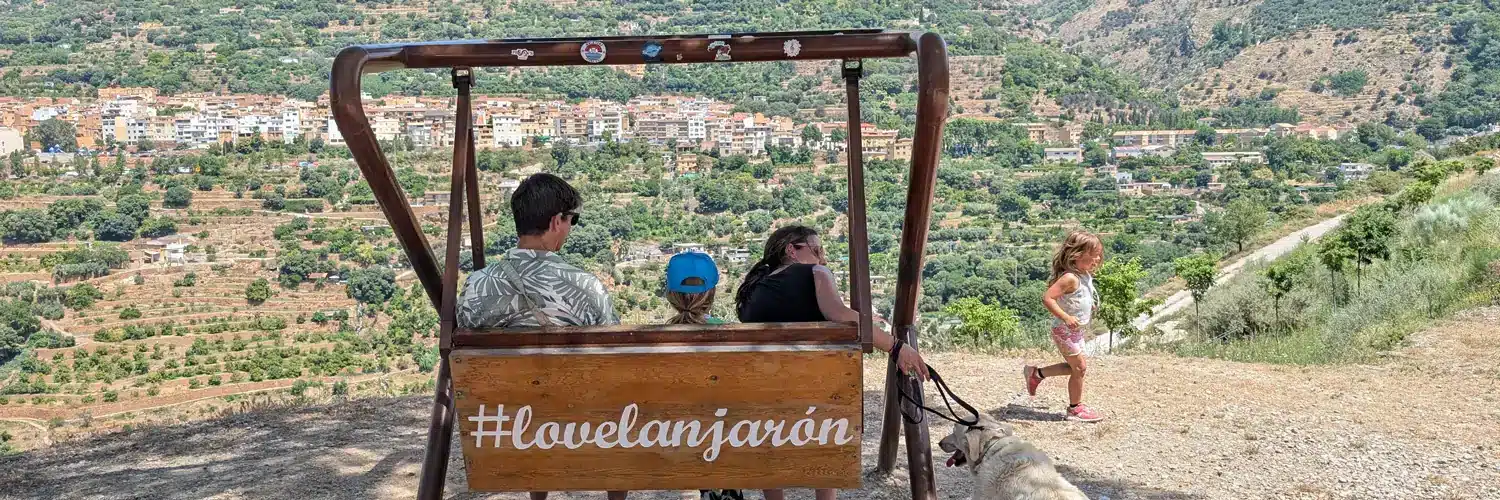
Table of Contents
The history of Lanjarón
Lanjarón — often called the gateway to the Alpujarra — has roots that stretch back to the Arab world. Its name likely comes from Al-lancharon, meaning “place of springs”, a description that couldn’t be more fitting. Water has always been the heartbeat of this mountain town.
The Moors were the first to harness its abundance, carving irrigation channels and water systems into the hillsides. Many of these acequias still criss-cross the landscape today, feeding orchards, terraces and old mills. Even after the Christian conquest in 1492, water continued to shape daily life. During the Morisco rebellion of the 16th century, these springs and channels became safe refuges for families trying to survive one of the most turbulent chapters in the region’s history.
Lanjarón’s true transformation came in the late 18th century, when the healing properties of its waters gained fame. This led to the creation of the Lanjarón Spa, which in the early 20th century attracted writers, artists and European royalty seeking rest in the cool mountain air. Later, the bottling company Aguas de Lanjarón carried the town’s name far beyond the valley, turning its water into a national symbol.
Today, wandering through Lanjarón feels like walking through a living history of water: fountains inscribed with Lorca’s poetry, centuries-old pillars, acequias still flowing between vegetable gardens… Every corner whispers its identity as the Water Town of the Alpujarra.
What to see in Lanjarón
Ruta de los Pilares del Agua: discovering Lanjarón through its fountains
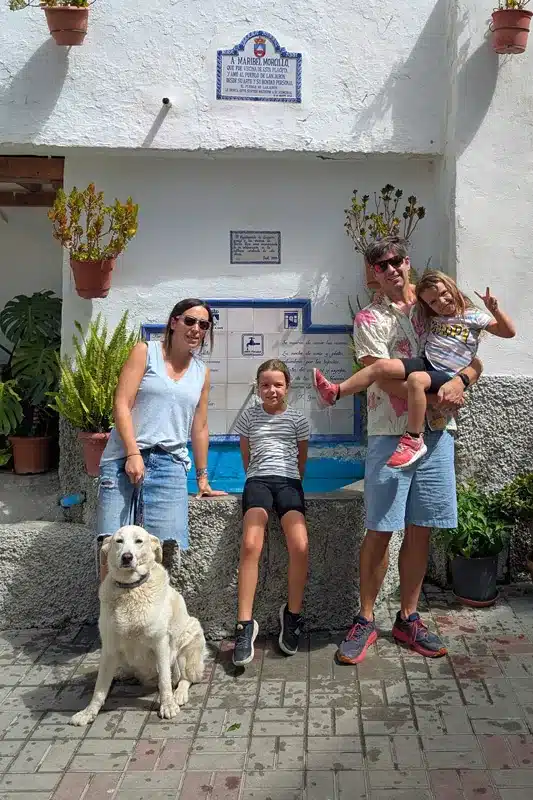
If there’s one thing that truly defines Lanjarón, it’s its fountains and water pillars. Wandering through the village means stumbling upon fresh, cold water at every turn — each fountain with its own story, charm and personality. There’s even an official Route of the Water Pillars, a gentle walking trail that lets you soak up (quite literally) the spirit of the town.
There are more than thirty pillars and fountains scattered throughout the old town and nearby paths. Many are decorated with verses by Federico García Lorca, transforming a simple sip of water into a small poetic moment. Some fountains are humble, others beautifully crafted, and almost all are framed by colourful flowers and classic Alpujarra ceramic pots.
🚶♀️ Choose your route:
There are several variations of the Water Pillars route. If you do them all, the walk can exceed 12 km and even venture into the countryside. But if you’re visiting with children, the best option is to stick to the urban route — shorter, easier and perfect for discovering every traditional barrio at your own pace.
💡 Insider tip:
Bring an empty bottle and refill it at each fountain. With our girls, it became a kind of “water-fountain treasure hunt”, and it turned the walk into an adventure that led us to corners we might never have found otherwise.
Barrio Hondillo – The old quarter of Lanjarón
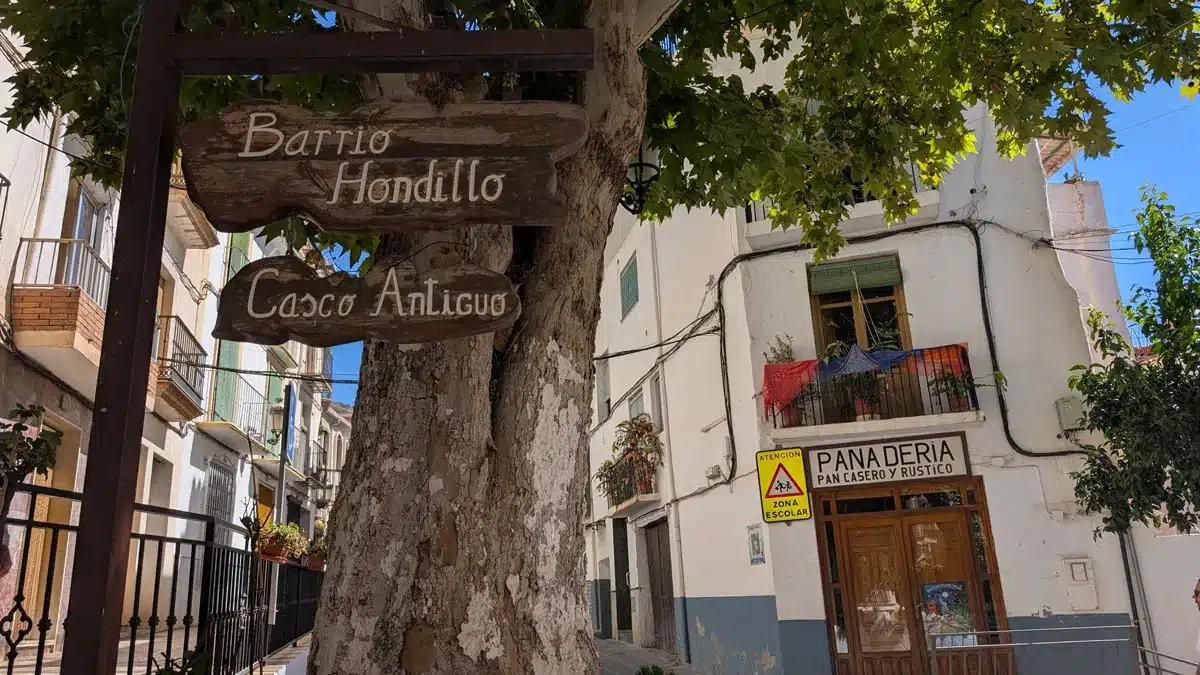
The Barrio Hondillo is Lanjarón at its most authentic — a little pocket of time where the past is still alive. This is the town’s medieval core: a maze of narrow streets, tiny squares and traditional tinaos, the covered passageways so typical of the Alpujarra. Wandering through it feels like walking through a living museum, with whitewashed houses stacked on top of each other, balconies overflowing with flowers and centuries of history etched into every corner.
Here are a few spots you shouldn’t miss:
- Placeta Colorá, small, colourful and impossibly photogenic.
- The beautiful tinaos of La Chispas, Tío Pedro and La Chirinas.
- Callejón de Dieguito, so narrow you can still see the marks left by the wheels of old carts.
- The delicate religious niches set into various façades — a reminder of local devotion.

👉 Hondillo’s roots go back to the Muslim period, when it was known as the Barrio del Aceituno. After the Morisco rebellion in the 16th century, the town was devastated and later rebuilt by Christian settlers — but much of the medieval structure was preserved. For that reason, Hondillo (alongside the castle) is one of the clearest surviving traces of Lanjarón’s medieval past.
For us, this was one of the highlights of the trip: losing ourselves in these streets felt almost like slipping into another era, with the quiet charm of the Alpujarra wrapped around us.
Lanjarón Spa – the town’s soothing, historic heart
The Balneario de Lanjarón is the soul of the town — the place that earned it the title of the Water Town of the Alpujarra. Its mineromedicinal springs have been famous since the 18th century, attracting writers, artists and even royalty in search of mountain air and healing waters. Today, it’s still the perfect place to unwind.
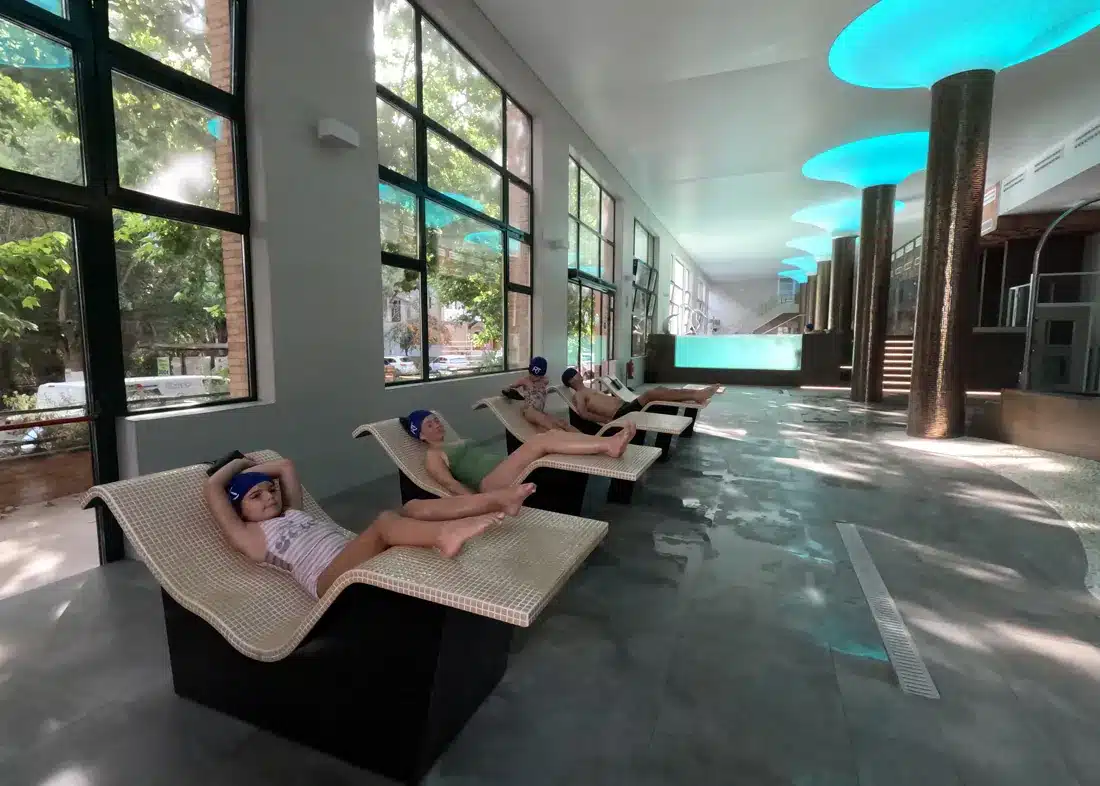
We visited as a family and tried the thermal circuit, a one-hour journey through warm pools, bubbling jacuzzis and gentle water jets. It was wonderfully relaxing for us and unexpectedly fun for África and Zoe. Children over six are welcome, and ours adored hopping from pool to pool and testing the different jets. Mike and I took turns relaxing while the girls explored — and honestly, it worked brilliantly.
💧 One of the most surprising moments was when the girls tried the different mineromedicinal waters. Some are soft, others naturally sparkling… and although the fizzy ones weren’t their favourite, the giggles made it worth it.
⚠️ Children can’t enter the sauna or steam room for safety reasons, but there’s still plenty for them to enjoy.
In short, this isn’t just a spa for adults — it’s a unique family experience, where everyone connects with the town’s waters in their own way
📌 Practical Guide: Lanjarón Spa
🧖♀️ What it offers:
Thermal circuit, jacuzzis, water jets, therapeutic treatments, massages, facials and balneotherapy consultations.
👶 Minimum age: 6 years (sauna and steam room excluded).
⏰ Opening hours:
Open year-round. Usually 10:00–14:00 and 17:00–20:00 (times vary by season).
💶 Prices:
- Thermal circuit (1 hour): €32 adults / €20 children
- Massages & treatments: from €30
📲 Booking:
Highly recommended, especially in summer and at weekends. Reserve online or by phone.
📍 Location:
Right in the centre of Lanjarón, easy to reach and with nearby parking.
💡 Tip:
Bring your flip-flops, towel and swim cap. You can rent them there, but its nicer to have your own.
Castillo de Lanjarón – ruins with unforgettable views
Perched on a hill just outside the village, the Castillo de Lanjarón — known locally as the Castillo de los Moros — offers some of the most breathtaking views in the entire area. From the top, you can see the valley unfold beneath you, the peaks of Sierra Nevada, and even the distant Granadan coast on exceptionally clear days.
It may be a ruin today, but it’s the kind of ruin that steals your heart — and the best part is that it’s completely free to visit.

What we loved most is how freely you can explore it: wander along the broken walls, climb gently over rocks, and stop at natural viewpoints that make you imagine what this fortress once protected. For our girls, it became a mini adventure park — climbing, exploring, discovering little corners (always carefully near the edges).
🚗 How to get there
- There’s parking directly beside the entrance.
- Or park in the centre of Lanjarón and walk up — it’s a gentle 10–15 minute climb.
☀️ Traveller tip: In summer, the sun hits hard and there’s almost no shade up here. Bring plenty of water, a hat and sunscreen. The effort is rewarded with views you’ll remember long after you’ve left.
El Salao Park – a refreshing green pause in Lanjarón
Parque El Salao is one of the most peaceful and refreshing spots in Lanjarón — a true green oasis at the entrance of the village. It’s the perfect place to slow down for a moment, especially if you’re travelling with children or simply looking for a quiet corner to catch your breath.
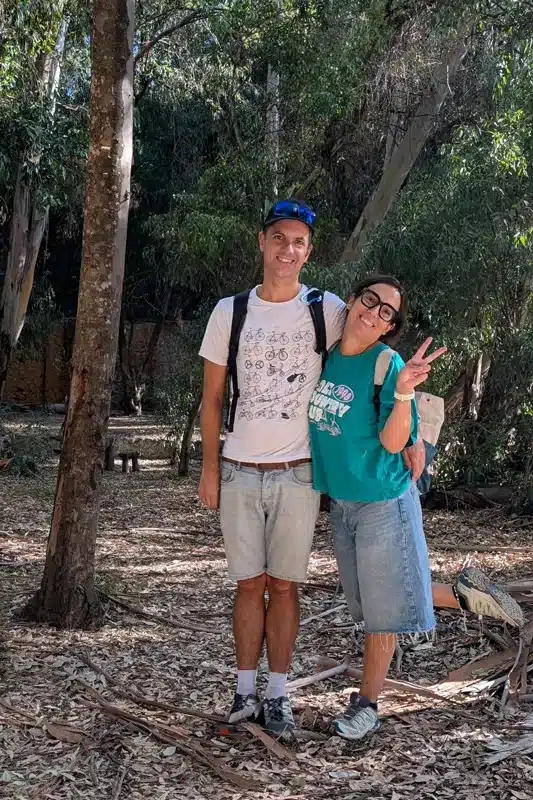
A small iron-rich stream runs through the park, giving El Salao its name. Alongside it you’ll find little waterfalls, fountains and ponds that keep the whole area cool and calm. Shaded paths lined with trees make it a lovely place for a gentle wander without rushing.
The park also offers:
💦 Fountains and stream running through the park
🎠 A small playground
🍴 Picnic tables and a rest area at the end of the walkway
🏰 A direct trail to the Castillo de Lanjarón, allowing you to combine both spots in one easy walk
For us, it was the perfect mid-visit pause — the girls played by the water, we stretched our legs under the trees, and everything slowed down for a moment. It’s a simple plan, but one we highly recommend if you want to step away from the bustle of the centre and enjoy a quieter side of Lanjarón.
Museo del Agua – Lanjarón’s story told through water
The Water Museum of Lanjarón is a small but wonderfully original space, where archaeology, storytelling and sensory experiences come together. Set inside a beautifully restored old water mill, the museum draws inspiration from the architectural style of the Alhambra — arches, stone, light and water in constant conversation.

The displays are crafted with real care. Modern panels blend with centuries-old walls, and in the oldest chamber a glass panel reveals projections over running acequia water, creating shimmering reflections that dance across the stone. It’s a poetic way to explain how deeply water shapes the history, culture and identity of Lanjarón.
👉 Families will love the dedicated children’s room, with small tables, drawing materials and space for little artists to create their own “water-inspired” masterpieces. And good news for pet owners: the museum is completely pet friendly.
📌 Practical Information – Water Museum of Lanjarón
📍 Location: at the entrance of the village, beside the river
🐾 Pet friendly
👨👩👧👦 Family friendly, with a children’s drawing area
⏳ Visit duration: 30–60 minutes
💶 Price: €1.50 per person
⏰ Opening hours:
- Mon–Tue: closed
- Wed, Thu & Sun: 9:30–13:30
- Fri & Sat: 9:30–13:30 and 16:30–19:30
Museo de la Miel – a sweet and fascinating world
The Honey Museum of Lanjarón, located in the beautiful Finca Berta Wilhelmi, is a fantastic place to explore the magical world of bees and beekeeping. It’s not just educational — it’s hands-on, interactive and perfect for families.
Inside, you’ll find:
🐝 Interactive exhibitions explaining how honey is made, from the first flower to the finished jar
🍯 Traditional and modern tools used by beekeepers
🎥 Audiovisual displays on the essential role bees play in our ecosystems
👩👩👧👦 Workshops and educational activities designed for families, schools and curious visitors
We couldn’t fit it into our visit this time, but we’re already planning to return — especially after loving the Honey Museum in Colmenar (Málaga), where we even walked among real hives wearing full beekeeper suits. If that experience taught us anything, it’s that beekeeping is even more fascinating up close — so the Lanjarón museum is firmly on our list for next time.
📌 Practical Information – Honey Museum of Lanjarón
👶 Ideal for families, even with very young children
📍 Location: Finca Berta Wilhelmi, just outside Lanjarón
⏰ Opening hours:
Spring / Summer
- Tue–Sun: 10:00–14:00
- Tue–Fri: 16:00–18:00
- Sat–Sun: 16:00–20:00
Autumn / Winter
- Tue–Sun: 10:00–14:00
- Sat–Sun: 16:00–18:00
📞 Confirm schedule: 958 770 472
💶 Price: budget-friendly (around €3 per person)
Deportes y naturaleza en Lanjarón
🥾 Hiking in Lanjarón
Lanjarón is a paradise for walkers. From here, dozens of trails branch out into the Alpujarra and the lower slopes of Sierra Nevada, offering everything from gentle family strolls to full-on mountain adventures.
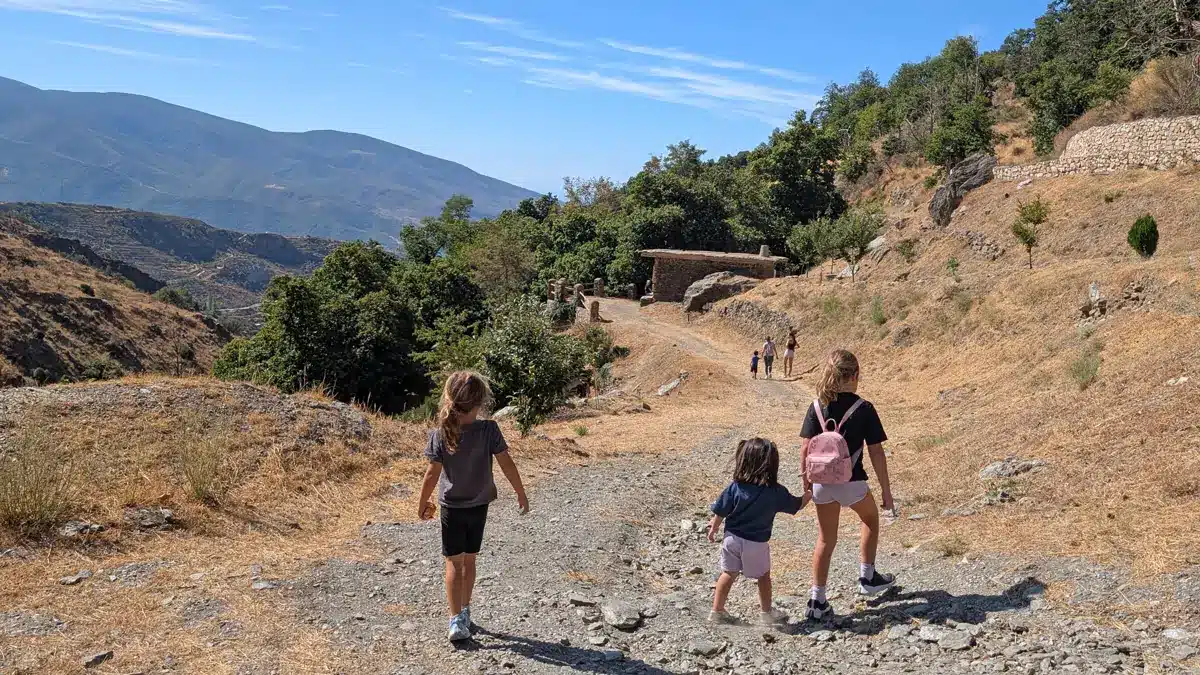
There’s a route for every mood: shady paths along acequias, steep climbs to panoramic viewpoints, quiet walks through orchards and chestnut groves, or long circular hikes that take you deep into wild ravines. What they all share is the same trio of ingredients: water, nature and unforgettable views.
💡 Insider tip:
If you’re travelling with children, start with the shorter routes such as Huerta de las Monjas. Save the bigger challenges — like Bordaila – Acequia Nueva — for when you’re ready for a proper day of hiking boots, snacks and mountain air.
🌄 Popular routes around Lanjarón (at a glance)
| Route | Distance | Elevation | Level | Type | Time | Highlight |
|---|---|---|---|---|---|---|
| Bordaila – Acequia Nueva | 10 km | 820 m | Moderate | Circular | 5 h | Historic acequia |
| Forestal – Peñuela | 9 km | 510 m | Moderate | Circular | 4 h | Mirador de Pallarín |
| Huerta de las Monjas | 2.6 km | 263 m | Easy | Linear | 1 h | Chestnut grove & picnic area |
| Aceituno – Cecarta | 6 km | 160 m | Easy | Circular | 2 h | Acequias |
| PR-A 345 | 12 km | 600 m | Moderate | Circular | 5 h | Mirador del Visillo |
| Pescado – Pantano Corta | 6 km | 210 m | Easy | Circular | 2 h | Giant swing |
| Lanjarón Castle | 3 km | 80 m | Easy | Circular | 1 h | Stunning castle views |
👨👩👧 Best route with young children
Our top pick for families is the gentle walk that links El Salao Park with the Castillo de Lanjarón.
It’s short (just 3 km return), mostly shaded thanks to the park’s trees, and has fountains and play areas along the way. The grand finale — climbing up to the castle — is the perfect little adventure. We’ve done it with kids as young as four, and they loved every moment.
Cycling in Lanjarón – road, mountain & pure Alpujarra adventure
If there’s one thing you need to know about our trips, it’s this: Mike never travels without a bike. And Lanjarón is one of those places where bringing one really pays off. From here, road cyclists can follow some of the most spectacular routes in all of the Alpujarra — long climbs, quiet mountain villages and endless views.
But mountain bikers won’t feel left out either. Lanjarón is a mini playground of forest tracks, technical singletrack and demanding ascents that reward you with views straight out of a travel magazine.
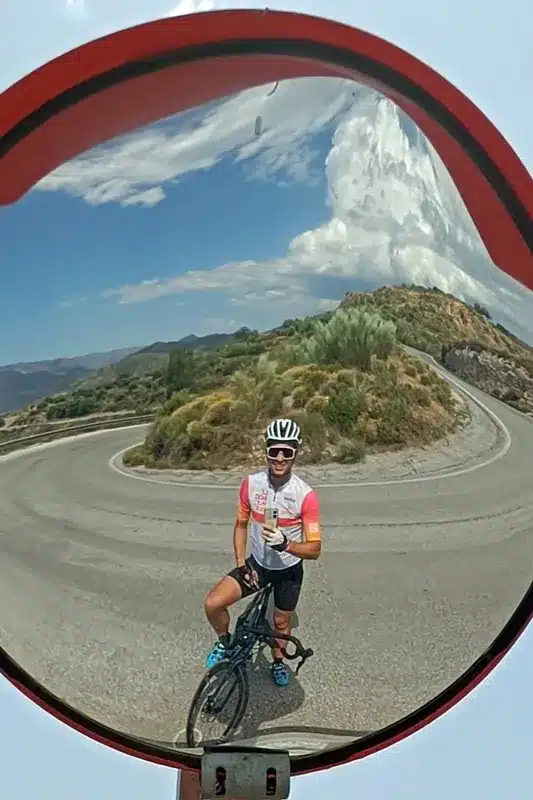
On our last visit, Mike tackled the climb up to El Tello, a route that winds into the mountains above the village. He came back glowing — tired, dusty, happy… and absolutely in love with the ride. If Mike says a route is good, believe me, it’s very good.
🚲 Recommended road routes
Here are two of the rides Mike recommends most from Lanjarón:
Vuelta de Alpujarras
- 📍 Lanjarón – Trevélez – Juviles – Orgiva – Lanjarón
- 📏 Distance: 114km
- ⛰️ Elevation gain: 2050m
- ⏳ 6-7 horas
- 💡 Highlight: Bocata de jamón de Trevélez.
Climb to Capileira
- 📍Lanjarón – Capeleira – Lanjarón
- 📏 Distance: 56km
- ⛰️ Elevation gain: 1250m
- ⏳ Time: 3 horas
- 💡Highlight: Descent into Lanjarón downhill track.
Mountain biking – El Tello
📍 Lanjarón – El Tello
📏 35 km
⛰️ 1200 m elevation gain
⏳ 3–4 hours
💡 Best part: Panoramic views of Sierra Nevada and the coast from Mirador de Cañar.
This is the route Mike rode before the girls even woke up. The climb is long and tough, but not technical — it follows a wide forest track, perfect for getting into a rhythm. Just before the descent you reach the Refugio de Tello, with a fountain to refill your bottles. On the way down, several side trails offer more technical options for riders looking for a shot of adrenaline.

Adventure sports around Lanjarón
Lanjarón is also a brilliant base for other outdoor activities:
💦 Canyoning – natural slides, pools and jumps in nearby ravines
🧗 Rock climbing – quiet walls in a stunning natural setting
🐎 Horse riding – a beautiful, gentle way to explore the Alpujarra
Whether you’re after a guided adventure or you’re bringing your own kit, you’ll find options for every level.
💡 Family tip: ask about minimum ages. Some canyoning routes are family-friendly; others require experience. If it’s your first time, start with an easy option so everyone ends the day wanting more.
Miradores de Lanjarón – views you won’t forget
One of the most enjoyable things to do in Lanjarón is to visit its viewpoints. Some are within walking distance of the historic centre, while others invite you to combine a gentle hike with sweeping views of the valley, the mountains or the whitewashed houses of the Alpujarra. And if you’re travelling with children, there are two viewpoints in particular that will be instant favourites.
The first is the popular Columpio de Lanjarón — a giant swing set against an incredible mountain backdrop. Although it sits along a longer hiking route, you can drive almost all the way and walk the last 10–15 minutes.
Here is the location of the swing and here is the parking area. The views alone justify the walk, and if you’re visiting with little ones… be warned: they won’t want to leave.

If you prefer a viewpoint you can reach entirely on foot, head to the Mirador del Visillo, on the eastern side of Lanjarón. It’s just over one kilometre from the Water Museum, making it a perfect short stroll. A few metres before reaching the viewpoint, you’ll find a smaller swing-bench overlooking the white houses of the village — ideal for a photo stop.
Here is the location of the Mirador del Visillo.
Another lovely spot is the Mirador de la Cañona, from where you’ll enjoy a great perspective of the Castillo de Lanjarón perched on its rocky hill.
These viewpoints are simple, beautiful and easy to reach — perfect for adding a little magic (and some great photos) to your visit.

The Festivals of Lanjarón – tradition, joy and a lot of water
Lanjarón is a lively village with festivals and activities throughout the year, but one celebration stands out above all the others — the legendary Fiesta del Agua. We experienced it this year and fell completely in love with it. If you’re planning a visit, follow @turismolanjaron on Instagram; they update all the festival details there.
💦 Fiesta del Agua y del Jamón – San Juan – Alpujarra style
On 23 June, the night of San Juan, Lanjarón transforms into something magical — a river of thousands of people, laughter, water and tradition. Over that weekend the town goes into full celebration mode, with activities centred around two things the locals adore: water and jamón 💧🐷.
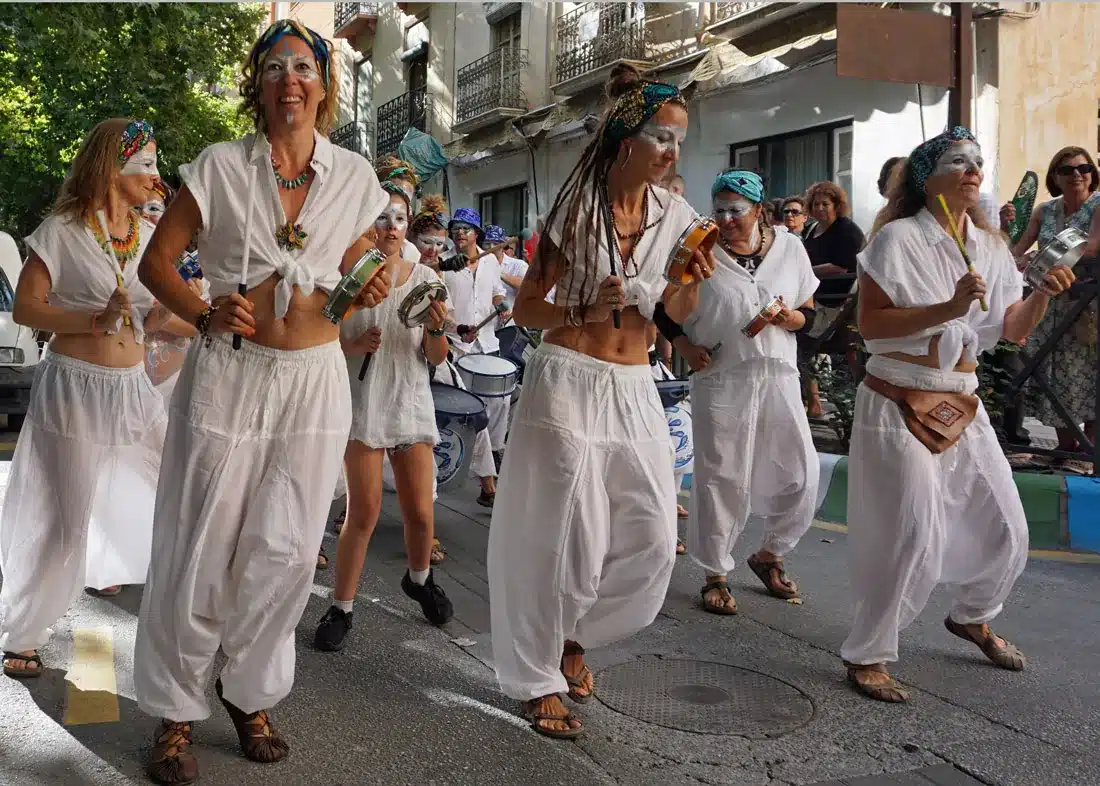
We were lucky enough to be there for the big weekend and it was an experience we’ll never forget. The programme is designed so everyone takes part — children, parents, grandparents, neighbours and visitors.
We started the day with the Children’s Olympics: volleyball, football, egg-and-spoon races, obstacle courses and inflatables. África and Zoe spent the whole morning running, jumping and laughing — the best warm-up possible.
Then came one of the most entertaining events: the Water-Throwing Competition, held on one of the prettiest streets in the village. The rules were simple: whoever threw the water in their bucket the furthest won… a whole leg of jamón. África joined in with all her energy — no jamón this year, but plenty of enthusiasm for a rematch.
One of the funniest traditions is the Palo del Jamón — a tall pole covered in soap that participants must climb to reach yet another jamón at the top. Kids, teenagers, adults… everyone gave it a go. África tried bravely, but we left the ham victory to a local teenager who climbed like a mountain goat.
In the afternoon came the Pública, a gorgeous parade with more than four decades of history. Families, local groups and groups of friends parade through the village in costumes that remain top-secret until the very moment of the parade. We managed to get a front-row spot and had the best time — and the neighbours made us feel just like locals. Even though our group included friends from Cuba, England, Italy and the US, everyone felt instantly at home 😍.

And then… the moment everyone waits for: the Carrera del Agua. Imagine water everywhere — buckets from balconies, hoses across the streets, entire families armed with water pistols, and even the firefighters joining in with their cistern trucks. Walking through the village becomes a full-blown water adventure. We ended up drenched and laughing uncontrollably.
Best of all, there’s also a Children’s Water Race during the day — perfect for families. It was África’s favourite moment of the entire weekend.
If you go, bring water pistols, buckets, swimming goggles for the little ones, swimsuits and spare clothes.
Experiencing the Fiesta del Agua in Lanjarón is one of those memories that stays with you for life — pure tradition, pure fun, and pure joy… soaked from head to toe.
Other celebrations throughout the year
Lanjarón doesn’t only celebrate the Fiesta del Agua — the town enjoys a full cultural calendar with events linked to music, food, tradition and local identity. If your visit doesn’t coincide with San Juan, don’t worry: chances are you’ll still find something special happening.
Here are some of the most popular festivals:
- Medieval Fair (August) – knights, crafts, medieval markets and street performances that fill the old town with atmosphere.
- Carnival (February) – colourful costumes, parades and plenty of humour.
- Corpus Christi & Crosses (May) – traditional floral decorations and religious processions.
- Rustic Festival (May) – crafts, local products and country-style celebrations.
- Lanjarock (July) – a vibrant summer music festival showcasing rock bands and local talent.
- Gran Castañada & Halloween (October) – roasted chestnuts, autumn flavours and a festive village atmosphere.
- Tapas Fair (November) – a brilliant excuse to taste the best of Lanjarón’s traditional cuisine.
Throughout the year, the town bursts with personality — so whenever you visit, you’ll find Lanjarón celebrating something.
The flavours of Lanjarón – a taste of the Alpujarra
Eating in Lanjarón is much more than a meal — it’s another way of understanding the village. Its cuisine is hearty, rooted in tradition and powered by exceptional local produce from the mountains, orchards and olive groves that surround it.
🥩 Mountain meats and traditional cold cuts
Pork and kid goat feature heavily in local cooking, prepared in the same way families have done for centuries. The embutidos (cured sausages) are made by hand, and their recipes have been passed down through generations.
The Alpujarra is also one of Spain’s most famous regions for cured ham, thanks to its pure mountain air and stable climate. Just minutes from Lanjarón, in villages such as Trevélez, some of the country’s finest Iberian and serrano hams are produced — and you’ll find them proudly served in many bars, restaurants and small shops.
🌱 From the orchard
The mild climate of the Alpujarra means that the land here is generous. Broad beans, cabbage, green beans, tomatoes, peppers, fennel and pumpkin all make their way into traditional dishes, giving them freshness, colour and flavour.
🌳 Olive oil, nuts and mountain fruits
Olive groves thrive around Lanjarón, producing a rich, flavourful olive oil often linked to the purity of the water used to irrigate the trees. Chestnuts, walnuts and almonds are also part of local life, eaten on their own or added to stews and desserts.
🧀 Cheese and honey – two local treasures
Lanjaron’s artisanal cheeses are made following traditional methods, with an increasing number adopting organic practices. And then there’s the honey: aromatic, floral and wonderfully varied thanks to the biodiversity of the surrounding hills.
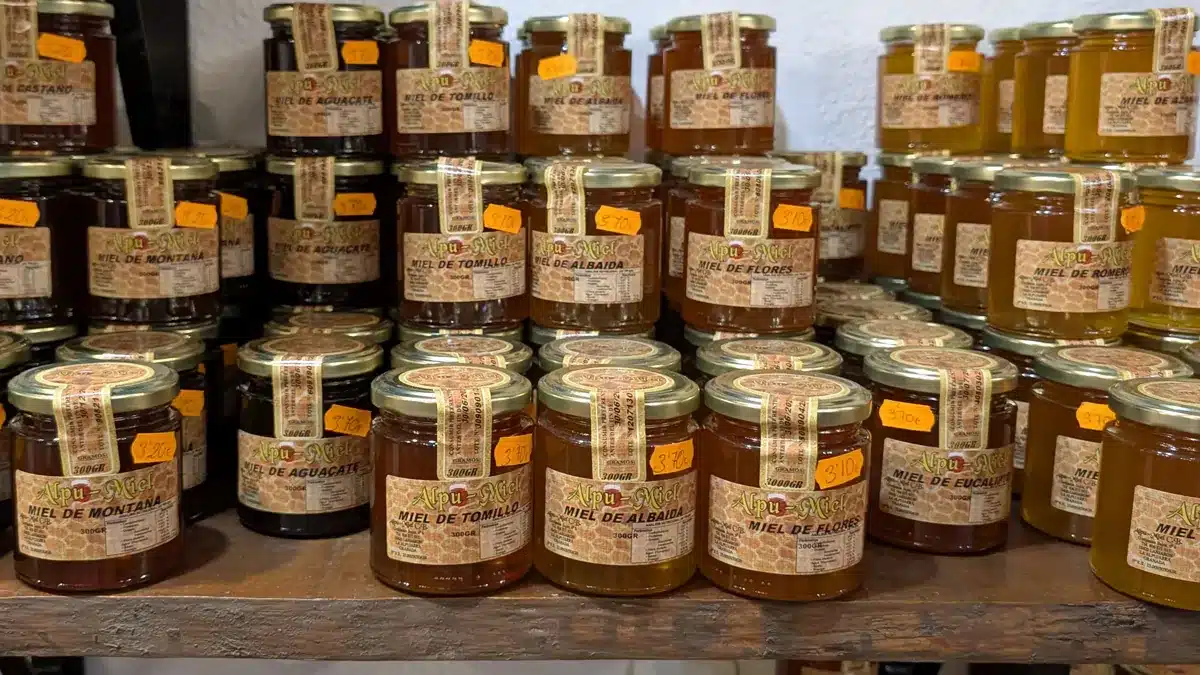
As you wander through the centre of Lanjarón, you’ll find charming little shops selling every type of honey you can imagine — the perfect edible souvenir.
🍴 Dishes you shouldn’t leave without trying
Here are some classics that truly capture the flavour of Lanjarón:
- Migas, stews and hearty soups – mountain comfort food, ideal after a day of hiking.
- Choto al ajillo – tender kid goat cooked with garlic, full of flavour.
- Plato alpujarreño – a generous plate of jamón, eggs, morcilla, chorizo, potatoes and peppers.
- Fennel and chestnut stew – a local favourite with deep Alpujarra character.

🍯 Traditional sweets
With their Moorish influence, Lanjarón’s desserts are a celebration of honey, almonds, pine nuts, citrus and warm spices. Look out for buñuelos, soplillo alpujarreño, roscos fritos, rosetas, fig cake, hojuelas, chestnut cake or fig flan.
One unique treat to try is the Jayullo, recognised by the Andalusian Academy of Gastronomy and Tourism — a true local speciality.
💡 Tip: pair your meal with a glass of wine from the Alpujarra or, in autumn, enjoy a freshly roasted chestnut from one of the seasonal festivities.
🛍️ Buy local – take a piece of Lanjarón home with you
Lanjarón can be seen in a day, but staying overnight transforms the experience. Dinner once the day-trippers have gone, a quiet morning stroll, browsing craft shops… you get to see the town at its most authentic.
Along with its food, Lanjarón is known for its wickerwork and jarapas — traditional handwoven rugs in vibrant colours. We have one in our own living room and adore it.
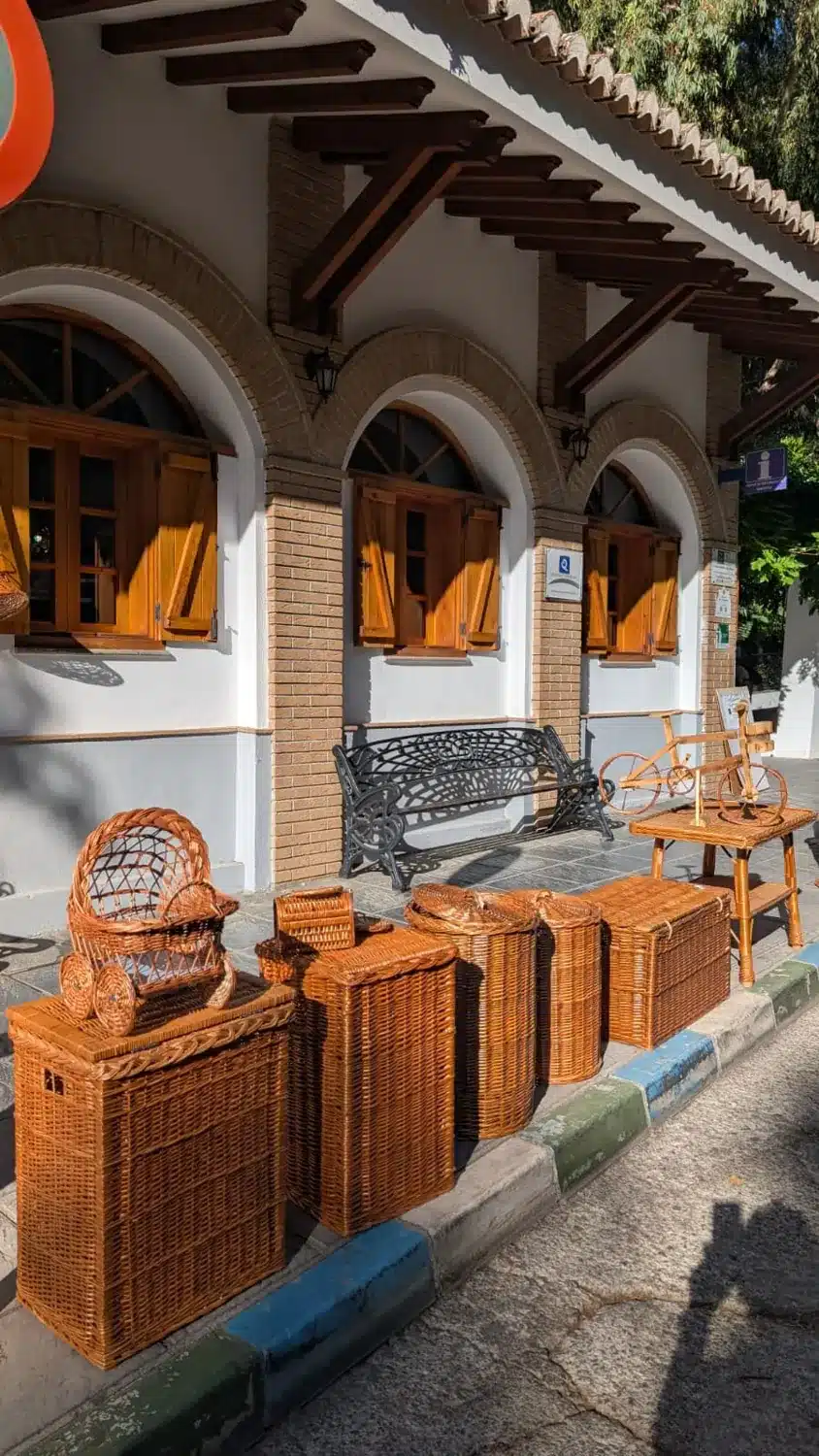
Choosing local products is one of the most meaningful ways to support the community — and a delicious way to bring Lanjarón back home with you.
Practical Information for Visiting Lanjarón
🚗 How to Get to Lanjarón
Lanjarón is very easy to reach, whether you’re travelling from Granada, the coast or further afield:
From Granada → 45 km / 40 minutes. Take the A-44 towards Motril, exit at junction 164 and continue 6.5 km along the A-348 straight into the village.
From the Costa Tropical (Motril) → Around 30 km via the A-44, then connect with the A-348.
From Málaga → Approximately 2 hours (150 km) following the A-7 towards Motril, then linking with the A-44 and A-348.
🚙 Parking in Lanjarón
The historic centre is charming but narrow, so it’s best to park just outside and explore on foot:
- Free public car park at the entrance of the village, next to Parque El Salao – ideal starting point.
- Balneario area – paid parking with good turnover, close to the spa.
- Castle esplanade – a spacious, free area opposite the Castillo de Lanjarón (exact location provided).
- Museo del Agua side – free roadside parking as you enter from the east.
On weekends and festival days, arrive early to secure a convenient spot. Here´s a map with the parking marked.
🍂 Best Time to Visit Lanjarón
Lanjarón is a year-round destination, and each season offers something different:
🌸 Spring: Perfect for hiking. The mountains turn bright green and the Barrio Hondillo fills with flowers.
☀️ Summer: If you want to experience the Fiesta del Agua on 23 June, this is your moment. It’s warm, so it’s a great season for spa sessions and refreshing stops at the village fountains. Accommodation with a pool is a big plus.
🍁 Autumn – our favourite: Quieter, cooler and breathtakingly beautiful. Sierra Nevada and the Alpujarra glow with autumn colours. Along with spring, it’s one of the very best times for walking routes.
❄️ Winter: Peaceful and cosy. Hearty dishes like fennel stew taste even better. The perfect winter day? Morning hike, afternoon in the balneario, and dinner by the fireplace with a glass of local wine.
💡 Tip: If you’re planning high-mountain hikes, avoid the coldest months — snow in Sierra Nevada can make certain routes tricky.
Conclusion
Lanjarón is far more than its famous water. It’s a place shaped by history, mountains, traditions and flavour — a village where you can unwind in a spa, follow ancient acequias on foot, join unforgettable fiestas and soak up the gentle rhythm of Alpujarra life. As the “Gateway to the Alpujarra”, it’s also the perfect starting point for exploring one of the most beautiful regions in Spain.
We’ve visited Lanjarón several times now, and somehow there’s always a new reason to return. Since our last trip, the village has unveiled a series of sculptures celebrating traditional trades, and we’re already planning to go back to see them. There’s also an exciting project to build a wooden walkway at the Tajo Colorao, a spectacular cliffside spot in the mountains. And for thrill-seekers (myself included), the village is preparing what will be the largest interurban zipline in Europe.
So yes — something tells me we’ll be heading back to Lanjarón more than once. And if you visit, I’m sure you’ll feel exactly the same. Let me surprise you with a little known area of Granada that will blow you away – discover the Geopark.
This article was originally published on our Spanish sister site Blogueraviajera.com
FAQ
How much time do I need to visit Lanjarón?
You can see the highlights of Lanjarón in a day, but staying overnight makes a huge difference. With an evening in the village you can enjoy the balneario, wander the historic streets at a slower pace and wake up ready for a morning walk.
Is Lanjarón a good destination for families?
Absolutely. Lanjarón is very family-friendly, with short walking routes, playgrounds, fountains, interactive museums and plenty of open spaces. The spa also welcomes children aged 6 and up. We´ve enjoyed our visits with children aged 4 and 7.
Where can I find the best views in Lanjarón?
The Lanjarón Swing, the Mirador del Visillo and the Mirador de la Cañona all offer fantastic views of the village, the valley and the Sierra Nevada National Park.