
Andalucía never runs out of surprises. Beyond its famous cities — Seville, Granada, Córdoba, and Málaga — lies another world of hidden villages, wild landscapes and unforgettable corners that most travellers never reach.

From pink flamingo lagoons to copper-coloured forests, cave dwellings, and white villages perched on cliffs, this region is a treasure chest of natural beauty and living culture.
Here we share 10 surprising places in Andalucía — authentic, lesser-known and full of that southern magic that makes you fall in love with this land again and again.
Table of Contents
1. The Pyrenees of the Costa del Sol (Pirineos de la Costa del Sol, Málaga)
This is one of those places I keep coming back to, and one that still surprises people.
“How is this only 45 minutes from Málaga?”

Hidden in the Axarquía around Alfarnate, Alfarnatejo and Periana, the landscape feels completely different to the coast. Wilder, quieter, more rugged. Limestone ridges, open valleys and winding mountain roads. They call it the “Pyrenees of the Costa del Sol”. Not officially, but once you’ve been, it makes sense.

We usually keep it simple. A circular drive from Periana, up to Alfarnate via Puerto del Sol, across to Alfarnatejo and back through the valley. One of those routes where you stop without planning to. Add a short walk, something easy through olive groves or hills, and a long lunch at Venta de Alfarnate, and that’s the day done.
2. Lanjarón & the Alpujarra of Granada
If you’re heading into the Alpujarra, you’ll pass through Lanjarón. Most people don’t stop, which is a mistake. It’s one of the easiest ways to experience this part of Granada.
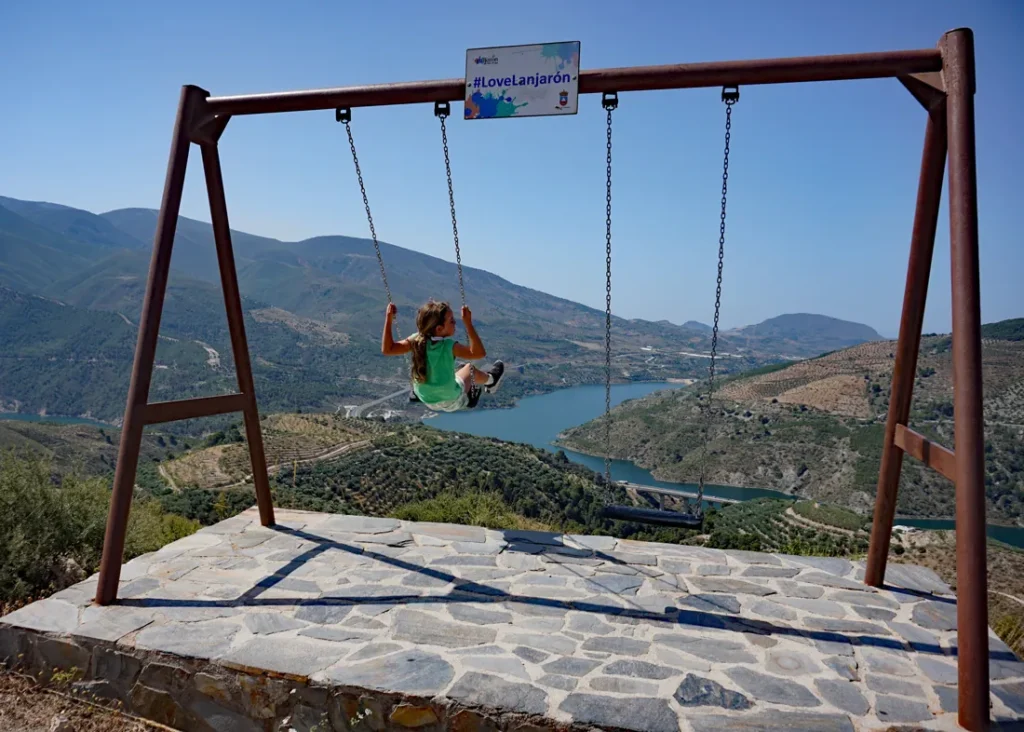
Take some time to explore the town. Follow the route of fountains and acequias to get a sense of its Arabic roots, then slow things down at the historic spa and its famous mineral waters.
I’ve based plenty of rides here, both road and mountain, and it’s one of those places where you always come back already thinking about the next route.

If you want to plan it properly, including what to do in Lanjarón, walking routes, cycling options and how to combine it with the Alpujarra, read our complete guide to Lanjarón and the Alpujarra on Andalusia Uncovered.
3. Flamingos at Fuente de Piedra Lagoon (Málaga)
Most people are surprised to learn there are flamingos in Málaga. Even more when they find out this is one of the largest colonies in Europe, at Laguna de Fuente de Piedra.

From the car park it looks flat and almost empty. Then you reach the viewpoints and see the scale of the lagoon, with flamingos spread across it.
Start at the visitor centre, then head out to the viewpoints or wooden walkways. You don’t need to walk far, but you do need to stop and look. It’s completely different to the rest of Málaga province. No mountains, just open space, light and wildlife.

If you want to plan it properly, including the best time to go and where to stop, read our complete guide to Fuente de Piedra on Andalusia Uncovered.
4. Genal Valley & Genalguacil (Málaga)
Autumn is when the Valle del Genal really stands out.
Chestnut forests turn deep copper, the hills change colour almost week by week, and the whole area feels very different to the rest of the province.

We’ve been a few times in autumn, and it’s one of those places where timing matters. When it’s right, it’s one of the most striking landscapes in southern Spain. We’ve also visited in spring, and it’s just as enjoyable in a completely different way, greener, quieter, and with a slower feel.
At the centre of it is Genalguacil, a small village where art is part of everyday life, with sculptures and installations spread through the streets rather than tucked away in a museum.

A simple plan works best here. A short walk through the forest, time in the village, and a long lunch somewhere nearby.
If you want to explore the area properly, you can read our guide to the best Copper Forest walks in Málaga, or head to our Málaga travel guide where we’re adding more routes and places from this part of the province.
5. The Sierra de Aracena (Huelva)
If you love jamón ibérico, this is where it starts to make sense.
The first time we came to the Sierra de Aracena, we thought we were coming for the food. We left thinking more about the dehesa landscape and how it’s shaped by the way pigs are raised for that famous ham. Each one needs a huge amount of space, around three hectares, to roam and feed on acorns during the montanera. It gives you a very different perspective on what ends up on your plate.

It’s worth visiting one of the curing bodegas. We left with a much better understanding of the process and a new appreciation for what goes into a good leg of ham.
We based ourselves near Aracena, in Jabugo, and kept things simple. It worked well as a base to explore the villages and the surrounding countryside.
Don’t miss the Gruta de las Maravillas. It’s an impressive underground world and well worth the visit.

If you want to explore it properly, including where to stay, what to eat and how to plan a route through the area, you can read our full guide to Jabugo and the Sierra de Aracena on Andalusia Uncovered.
6. El Torcal de Antequera (Málaga)
El Torcal de Antequera, a natural “stone city” of limestone formations shaped over millions of years, where walking feels more like navigating a maze than following a trail.
We’ve been a few times, with and without the kids, and it’s one of the easiest places to recommend if you want something different without needing a full day.

There are three main routes, all clearly marked. The Green is the shortest and easiest. The Yellow is the one we keep coming back to, around 3 km and still very manageable, but with more variety. The Orange is longer and more exposed, starting from the lower car park.
With the girls, the Yellow route worked well. Long enough to feel like an adventure, but not too demanding. Half the fun is spotting shapes in the rocks, the Camel, the Sphinx, and whatever else you think you can see.

It’s an easy half-day plan from Málaga, but one that feels completely different to anything on the coast.
7. Bolonia & Baelo Claudia (Cadiz)
One of the best Atlantic beaches in Europe, right next to a Roman city.
That’s what makes Bolonia stand out.

On one side, a wide, open beach with clear water and a huge sand dune rising above it. On the other, Baelo Claudia, a 2,000 year old town built directly on the shoreline.
We’ve been a few times, and the plan is always the same. Walk the ruins first, then head straight onto the beach.
It’s a simple visit, but a rare combination.

If you want to plan it properly, including when to go and how to combine it with Tarifa, read our complete guide to Bolonia and Baelo Claudia on Andalusia Uncovered.
8. Cerrada del Utrero & Puente de las Herrerías (Cazorla, Jaén)
Cerrada del Utrero is a short circular walk, under 2 km, around 45 minutes, easy and with very little elevation. But the views over the canyon carved by the Guadalquivir are far better than you’d expect for such a simple route.

And there’s no better way to finish than heading a few minutes further to Puente de las Herrerías and cooling off in the river.
It’s a great place to include on a visit to Cazorla.
9. Geopark – A Journey Beneath the Earth (Granada)
Granada Geopark is one of the biggest surprises in Andalucía.
I’d driven past this area on the motorway for years on the way to visit Lucía’s family and never imagined what was just off the road.
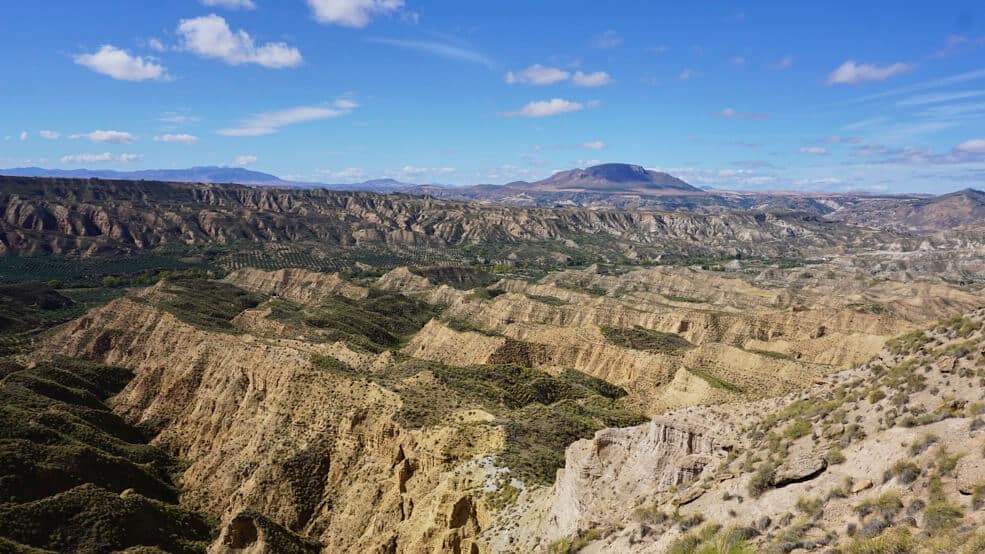
The first time we properly stopped and explored around Gorafe, it completely changed my perception of this part of Granada.
What really made it click was a long, slightly brutal MTB ride through the area. Climbing through those badlands, dropping into valleys, and seeing the scale of the landscape from inside it rather than from the road. It’s one of those rides you finish exhausted but still thinking about hours later.
Beyond the landscape, there’s a lot here that you don’t expect. One of the largest concentrations of prehistoric dolmens in Europe, cave houses carved into the earth, and some of the clearest night skies in Andalucía.

We based ourselves in Gorafe, stayed in a cave house, and slowed things right down. That’s how this place works best.
If you want to explore it properly, including where to stay, what to do and how to plan your route, read our complete guide to Gorafe and the Granada Geopark on Andalusia Uncovered.
10. Vía Verde del Aceite (Cordoba)
Vía Verde del Aceite is the most popular cycle track in Spain, and it’s easy to understand why.

It runs for 127 km through olive groves, old railway stations and white villages, but you don’t need to do it all. The stretch between Doña Mencía and Zuheros is the one we always recommend. Around 12 km return, flat, traffic-free, and with that moment crossing the viaduct as Zuheros appears ahead.
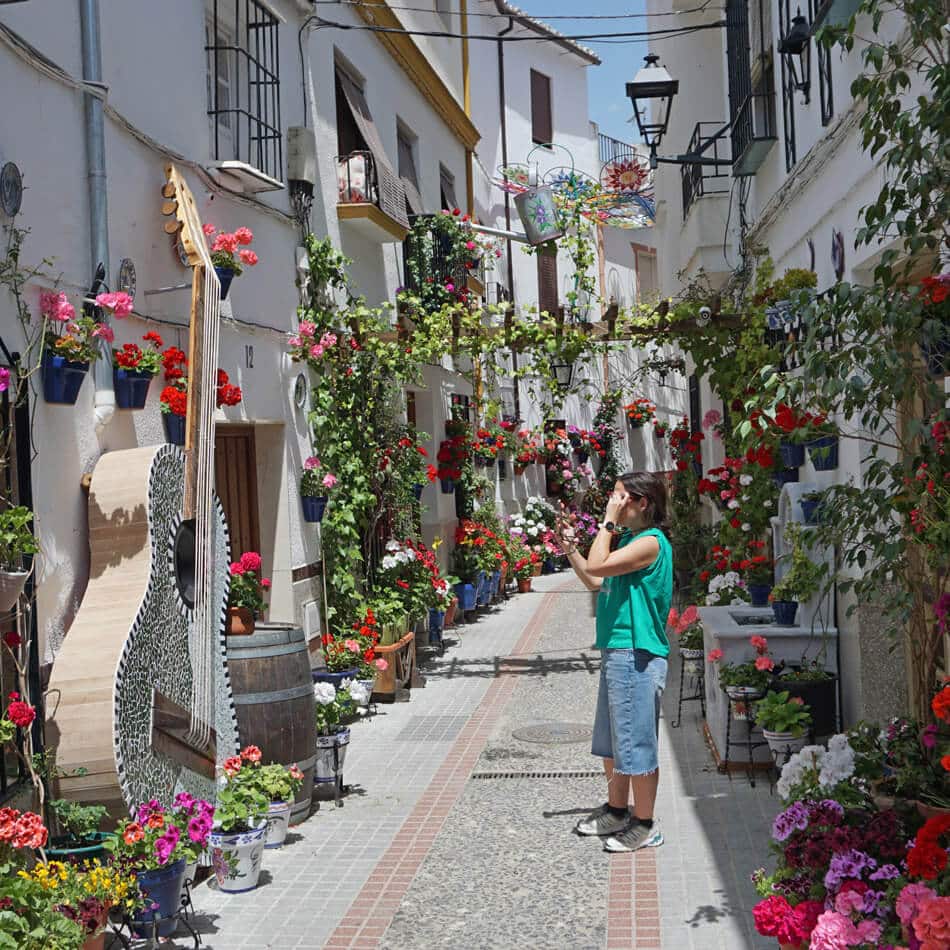
We’ve done it as a family ride and I did a great 140km ride. Both work.
If you’re exploring more of the area, you can find more ideas and routes on our Córdoba guide on Andalusia Uncovered.
However long this list gets, it will never be long enough — Andalusia has over a million magical corners waiting to be discovered.
Thank you for reading — and see you on the road! 🚗✨
About the Authors:
This article was written by Lucía and Mike, the couple behind Andalusia Uncovered and the creators of Bloguera Viajera, one of Andalusia’s leading family travel websites, where we have spent years sharing our experiences exploring Spain and beyond.
Andalusia Uncovered grew from a simple idea: to create an English-language resource based on real experiences, not recycled travel advice. Every place we write about is somewhere we have personally visited, photographed and explored ourselves.
Lucía grew up in Spain and Mike moved here from England in 2010. Together, we have spent years discovering Andalusia’s cities, white villages, beaches, mountains and lesser-known corners, often with our two daughters in tow.
In a world increasingly filled with generic AI-generated content, we believe first-hand experience matters more than ever. Our aim is to provide honest recommendations, practical advice and genuine local insight to help you discover the real Andalusia for yourself.